Working k9
Bite Work in Hot Weather: Heat Safety for the Dog, the Decoy and the Gear
Hot weather changes bite work for everyone on the field. How to protect the dog, the decoy in the suit, and the gear itself — with a summer-season checklist for trainers.
Introduction: Summer Changes Everything on the Field
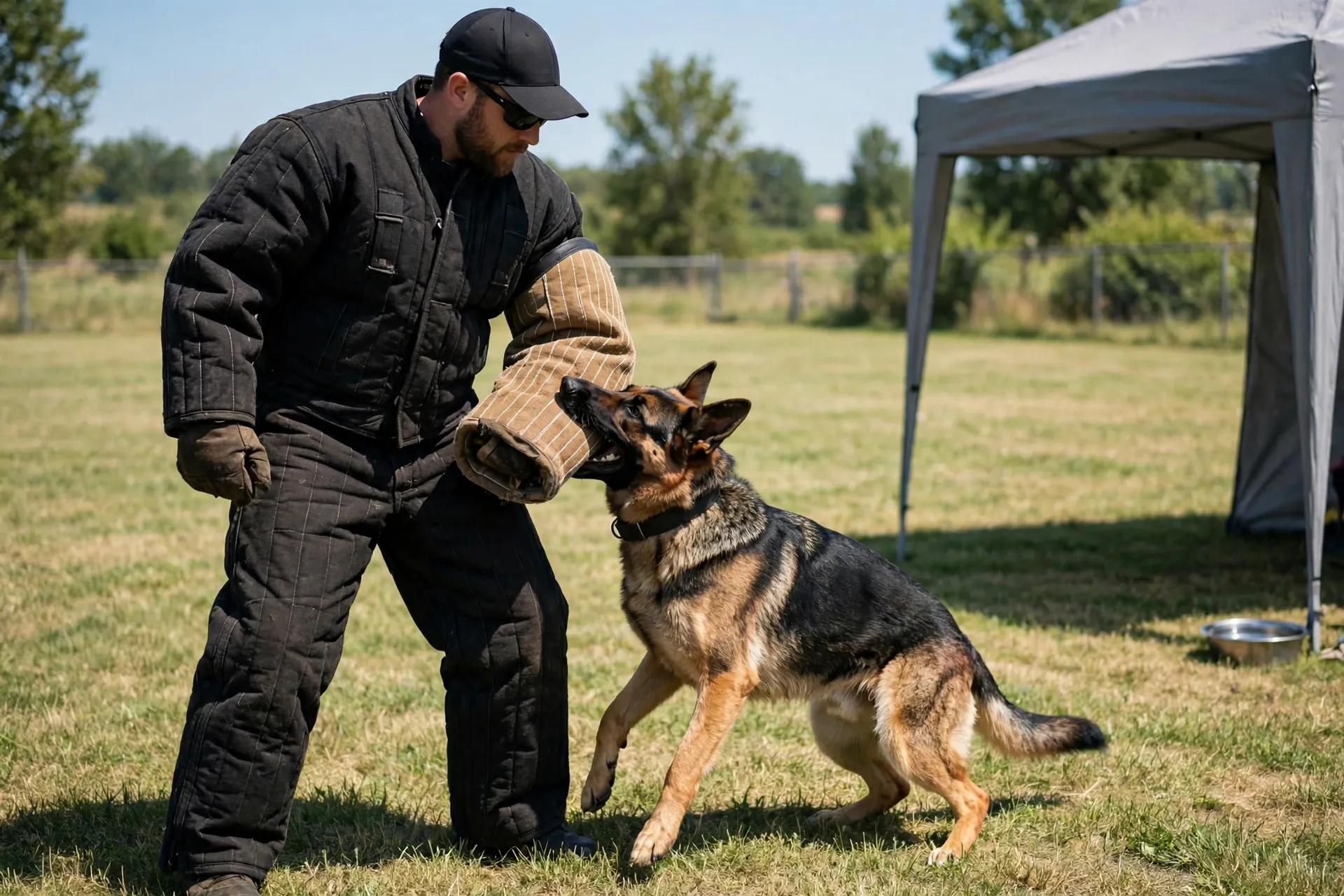
Bite work is a winter sport in much of the northern hemisphere, and a summer problem in the south. Trainers in Australia are heading into the hottest part of the year, with long days and strong sun. The same exercises that are routine in mild weather become a risk when the temperature rises: the dog overheats faster, the decoy sweats under layers of padding, and the gear takes a beating from sun, sweat and damp storage.
Heat safety is three problems at once: the dog needs shorter work and real rest, the decoy needs a plan for the heat inside the suit, and the equipment needs care that matches the season, or it wears out early and fails when it is needed most. This guide covers all three.
The Dog in the Heat: Shorter Work, Real Rest, Water Always Within Reach
A working dog cools itself mainly by panting, and panting has limits. On a hot day the dog starts the session already warm. The signs of trouble are easy to miss: the grip stays strong, the drive stays high, and the dog keeps coming back for more. A driven dog will work past the point where it should stop, and it is the trainer who has to call the break.
Shorten the session before the dog shows distress, not after. A few short rounds with full rest between them are worth more than one long round that leaves the dog exhausted. Rest means the dog out of the sun, in shade or in a cool vehicle, with water offered and time to bring its breathing back to normal. A dog that is still panting hard is not ready for the next round.
Water should be on the field, not back at the car park. Offer it between rounds and again at the end of the session. A dog that refuses water after hard work deserves attention rather than another round. If a dog shows signs of serious heat distress, cool it down at once and seek veterinary help.
Watch the grip as well as the breathing. A dog that grips shallow, lets go early, or shows less enthusiasm than usual is often already too hot, even when it is still willing to work. End the session on a good note and come back another day. No training goal is worth a dog in distress.
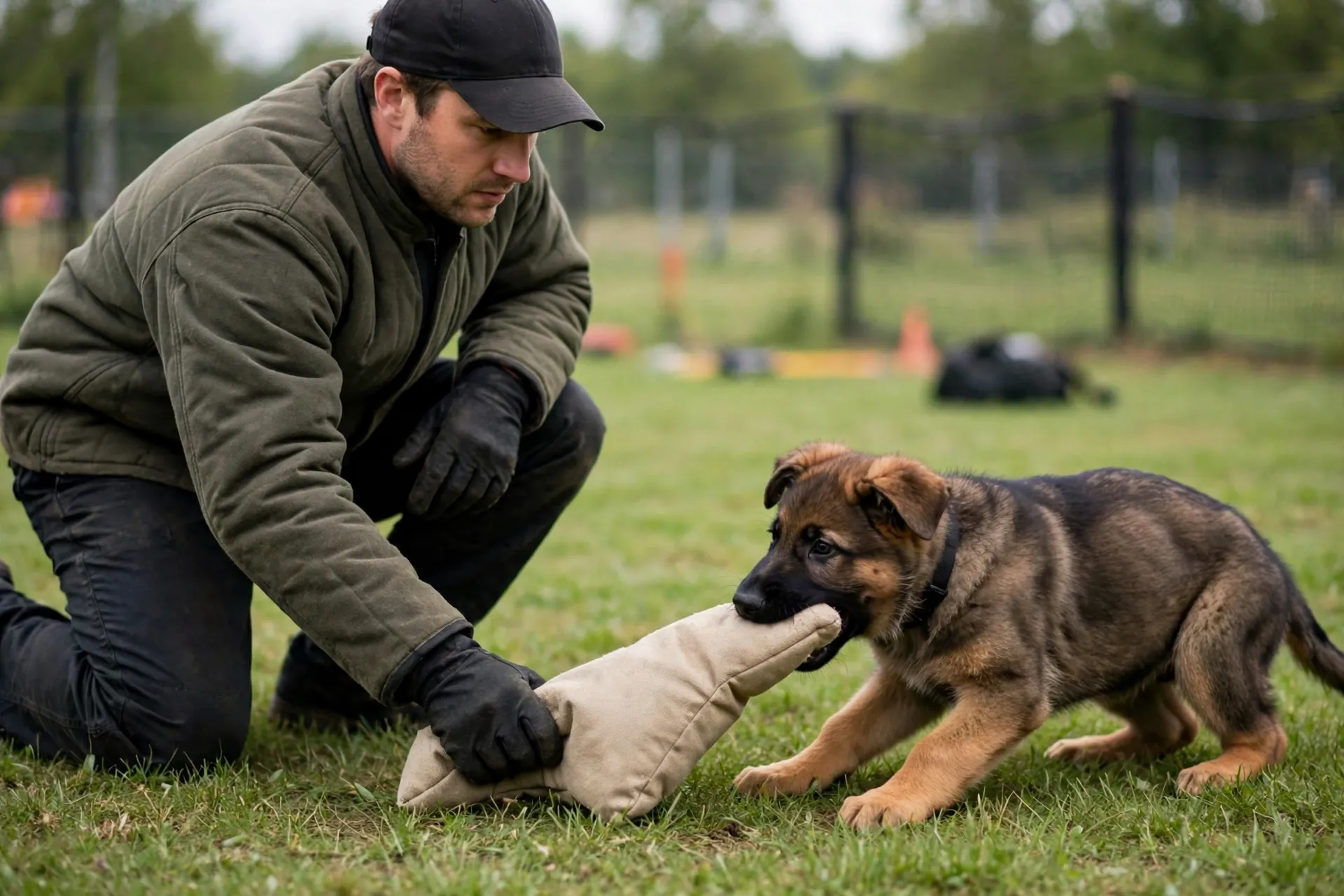
Young dogs in foundation work and older dogs feel the heat sooner than a fit adult, and a dog new to the climate needs time to adjust before full sessions. For foundation dogs, see our puppy and foundation bite-work starter kit guide.
The Decoy in the Suit: The Hottest Job on the Field
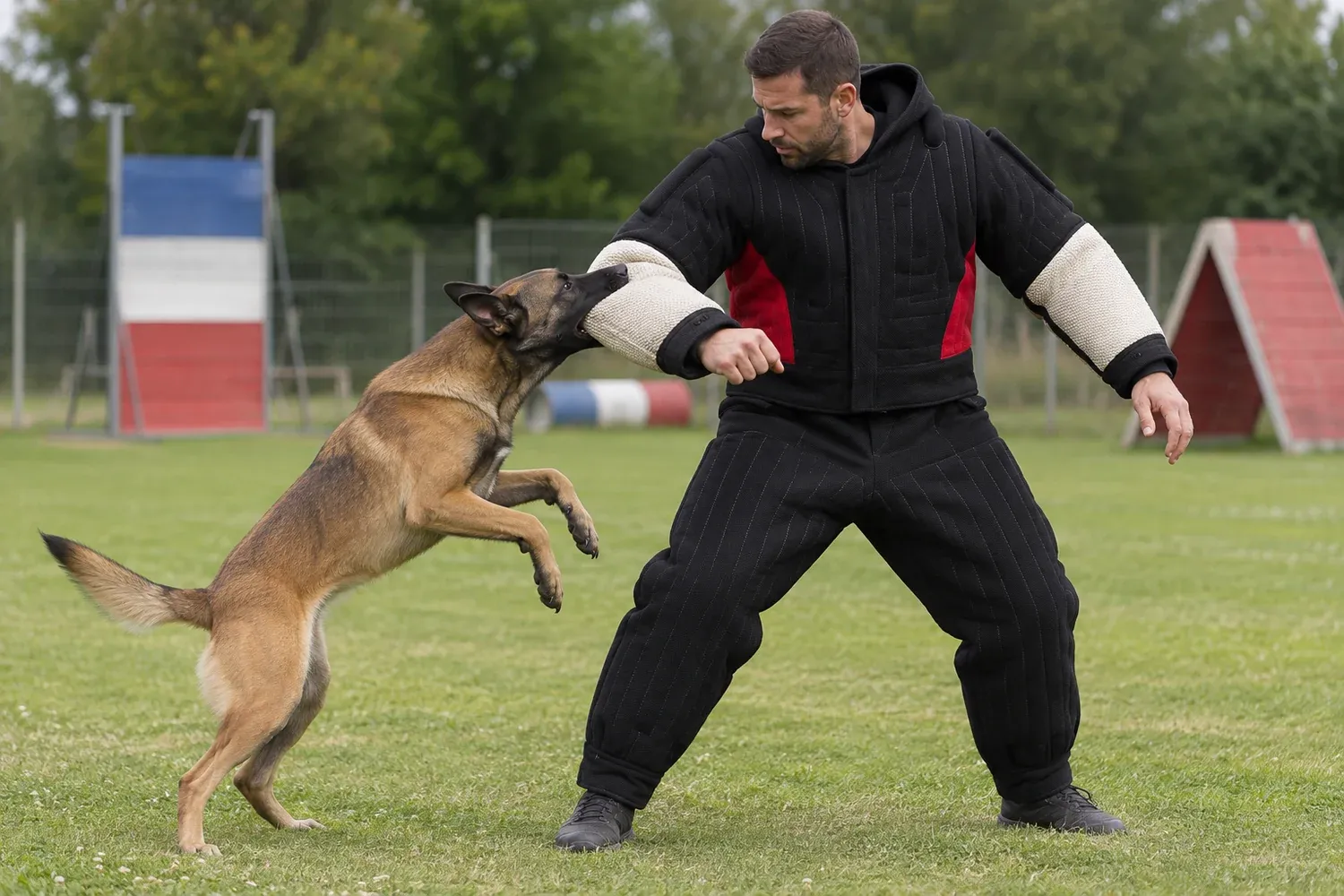
The decoy has the hardest job in hot weather. A bite suit is built to absorb impact, and that padding is also insulation. Inside the suit, the decoy works hard in a layer that holds heat in, with limited airflow and no way to cool down between rounds except to take the suit off. On a hot day, the decoy can be in more danger from the heat than the dog.
Plan the decoy work in short rounds, with real breaks: the decoy comes out of the suit between rounds, gets into the shade, and drinks. A second decoy, where the club has one, is worth more in summer than at any other time, because it lets each decoy rest properly while the session continues.
Hydration starts before the session, not during it. The decoy should arrive hydrated and keep drinking through the session. A decoy who feels dizzy, stops sweating, or feels confused should stop work at once and cool down. These are signs the body is no longer coping with the heat, and they are not something to push through.
Light, breathable layers under the padding help, and the suit itself should be aired between rounds rather than left in a heap in the sun. A suit that is already hot from the last round is a harder place to work in than a suit that has had time to cool.
Planning the Session: Time of Day, Shade and a Shorter List
The simplest heat safety measure costs nothing: move the session. Early morning and late evening are the coolest parts of a hot day, and a session moved by a few hours can be the difference between good training and a risk.
Shade is the second free measure: the dog waits in shade, the decoy rests in shade, and the spectators stand in shade. A field with no shade needs a canopy, a vehicle awning, or a different location. The gear should wait in the shade too.
Keep the session list short. Pick the work that matters, do it well, and finish early. The dogs will learn more from a short session in which they are sharp than from a long session in which they are exhausted.
The Gear in Heat and Sun: Jute, Synthetics and What the Sun Does to Them
Bite equipment is built to be bitten, and heat and sun add a second kind of wear. Jute, the standard material for bite suits, sleeves and pillows, is a natural fibre. A jute sleeve soaked with sweat and left in strong sun dries hard and stiff, and a stiff sleeve is less comfortable for the dog to grip and more likely to wear unevenly. The answer is care after the session.
Synthetic bite materials dry faster than jute and hold their shape well, and long exposure to strong sun can still fade colours and weaken stitching over time. The rule is the same for both: keep the gear out of direct sun when it is not in use, and never leave it baking in a closed vehicle.
Handles, straps and stitching deserve a look in summer, because sweat and sun attack them first. A strap that is stiff with dried sweat will crack, and stitching that has been soaked and dried many times without cleaning will fail sooner than stitching that is rinsed and dried properly. A quick check of the handles and the seams at the end of a hot session catches the wear that would otherwise show up as a failure in the middle of a bite. For a comparison of the materials used in bite gear, see our guide to bite gear materials compared.
Drying and Storage After a Hot Session
Jute equipment packed away damp will smell, and the damp will work on the fibres and the stitching in storage. The routine is short: shake off the loose dirt, wipe the gear down, and hang it to dry in shade with good airflow. Shade matters: strong sun dries the surface fast and leaves the inside damp.
Never dry bite equipment on a heater or with direct heat. High heat hardens jute and can damage stitching. Air drying takes longer, and it is the only method that keeps the material in good condition.
Store the gear in a cool, dry place, not in a hot vehicle or a damp shed. A bite suit hung up with air around it will be ready for the next session, and a bite suit folded damp into a bag will not. For the full cleaning routine, see our guide to cleaning and maintaining a bite suit.
When Heat Damage Means Replacement
Some wear can be managed, and some wear means the gear should be retired. A sleeve that has gone stiff and no longer gives a fair grip should be retired. Stitching rotted from repeated soaking and poor drying will not hold under a hard bite, and a handle that is cracked or coming away from the body of the equipment is a failure waiting to happen. These are safety issues, not cosmetic ones. Check the gear at the start of the summer season, and again at the end. For the full list of wear signs, see our guide to when to replace bite equipment.
The right suit for the sport matters too: the weight and padding that suit a cool-weather session may be more than a decoy needs on a hot day. For guidance on matching the suit to the sport, see our guide to bite suits by sport.
Summer Bite-Work Checklist
Keep this checklist where the club keeps its gear:
Stage | The dog | The decoy | The gear |
|---|---|---|---|
Before the session | Arrive rested; water already on the field | Arrive hydrated; plan short rounds | Check handles, straps and stitching |
During the session | Short rounds; rest in shade between rounds | Out of the suit between rounds; drink in the shade | Keep waiting gear in the shade, not in a closed vehicle |
After the session | Water again; wait until breathing is back to normal | Cool down fully; stop if dizzy, confused or no longer sweating | Wipe down; hang to dry in shade with good airflow |
Check the Kit Before the Hot Months
Summer is the season to check the kit, not to discover that it has failed. If your club is heading into the hot months, check the gear now. Clubs training through the summer usually keep a spare sleeve and pillow in rotation, so one set can dry properly while the other works. We supply the full range from one supplier — bite suits, sleeves, pillows, tugs, muzzles, vests and jackets, harnesses and leads — with a private label service for clubs and retailers. Ask us for the catalogue and a quote.