Working k9
Puppy and Foundation Bite-Work Starter Kit: What to Buy First — and What to Leave Until Later
Starting bite work with a puppy or a new club? This starter kit guide shows what to buy first — wedge, rag, tug, pillow, sleeve — and why the full bite suit comes last.
Every training club has the same story. A new club places its first equipment order, and the first item on the list is a full bite suit. It is the most expensive item in the catalogue, and it arrives before anyone in the club is ready to use it. The suit hangs in the store room while the puppies make do with an old tug from home.
That order is backwards. Bite work is built in stages, and the equipment should follow the same stages. A puppy does not start by biting a suited decoy. It starts by chasing, tugging and winning something soft, and each step adds a little more challenge.
This guide sets out a starter kit for puppy and foundation bite work: what to buy first, what each item is for, and what to leave until later.
The order matters: drive before protection
Foundation bite work has one job, and it is not protection. The job is to build a dog that wants to chase, grip and win. Grip, confidence and the habit of biting and holding come first. Pressure, distance and a decoy in a suit come much later.
So the buying order is simple: start soft and small, and add size, weight and hardness only when the dog is ready. A club that buys in this order spends less up front, and the gear gets used every session.
First buy: the bite wedge
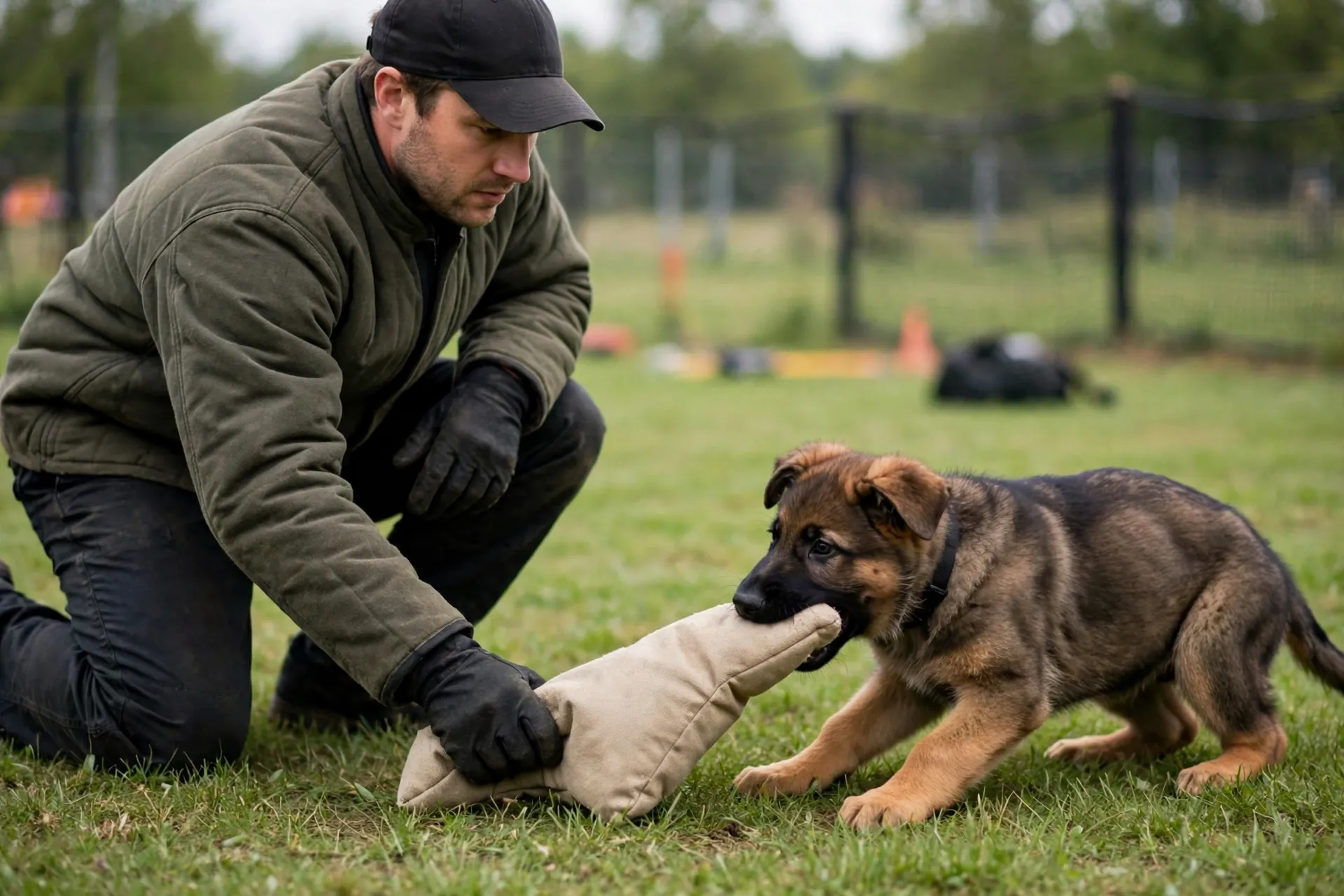
The first item in the kit is a bite wedge, sometimes called a puppy pillow. It is a soft, flat wedge of bite material with handles, made to be presented low and close to the ground so a puppy can chase it, catch it and win it without jumping or stretching. For most foundation programmes it is the most-used piece of equipment in the first months.
Choose a wedge that is soft enough for puppy teeth and big enough for the puppy to grip with a full mouth. A wedge that is too hard makes the puppy bite shallow and let go. Two wedges are better than one for a club, because wedges are the item that wears out first.
The wedge is also the decoy training tool. A new decoy learns presentation on a wedge: how to move it, how to let the puppy win, and how to read when the puppy is tiring.
Second buy: bite rag and bite tug
Once the puppy grips the wedge with confidence, the kit grows with a bite rag and a bite tug. The rag is a strip of soft material, usually cotton or a cotton blend, that moves fast along the ground and builds chase and prey drive. The tug is a firmer, handled toy that the puppy can pull against, and it starts the habit of holding on under a little resistance.
The rag and the tug do different jobs, which is why both belong in the kit. The rag rewards speed and commitment to the chase. The tug rewards grip and holding on. Used together, the two items build a dog that wants the bite and keeps it.
For a club, buy tugs in more than one size. Puppies vary, and a tug that suits a large shepherd puppy will swamp a small terrier type. Keep the material soft at this stage.
Third buy: bite pillow and short bite pads
The bite pillow is the next step up in size and firmness. It is a padded, rectangular target that the decoy presents at body height, and it teaches the puppy to target a larger surface and to hold a full grip while the decoy moves.
Short bite pads belong in the same stage. They are smaller and lighter than a full sleeve, they strap to the forearm, and they let the decoy present a bite target on the arm without the weight and bulk of a full sleeve. For a club with new decoys, short pads are a good bridge: the decoy starts to learn arm presentation, and the dog starts to learn that the bite target can be on a person.
Buy pillows in a firmness the puppy can grip without slipping. A pillow that is too hard for the dog in front of you will produce short, shallow grips.
Fourth buy: the bite sleeve
The bite sleeve is the first real protection item in the kit, and it should arrive only when the dog grips with confidence and holds under movement. A sleeve protects the decoy arm, and it also changes the picture for the dog: the target is now on a person, at arm height, and the dog must commit to it.
For foundation work, a softer training sleeve suits most dogs better than a hard trial sleeve. The dog is still learning, and a sleeve that forgives a slightly imperfect grip keeps the dog biting with confidence.
One sleeve per decoy is the minimum, and a club with two working decoys needs two. Sleeves are sized, so a club should not buy one sleeve and expect it to fit every arm. Check the fit before the first session, not during it.
Last buy: the full bite suit
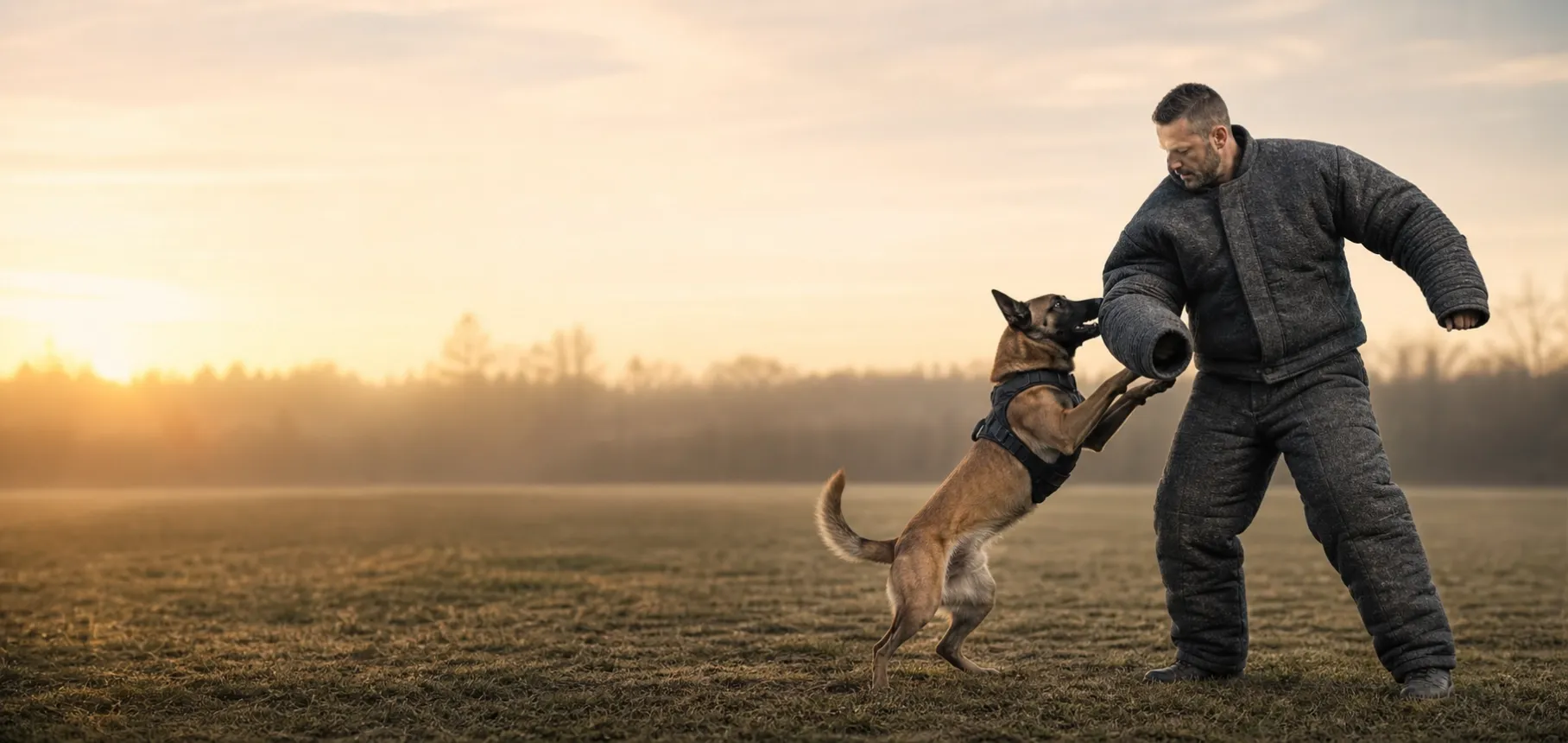
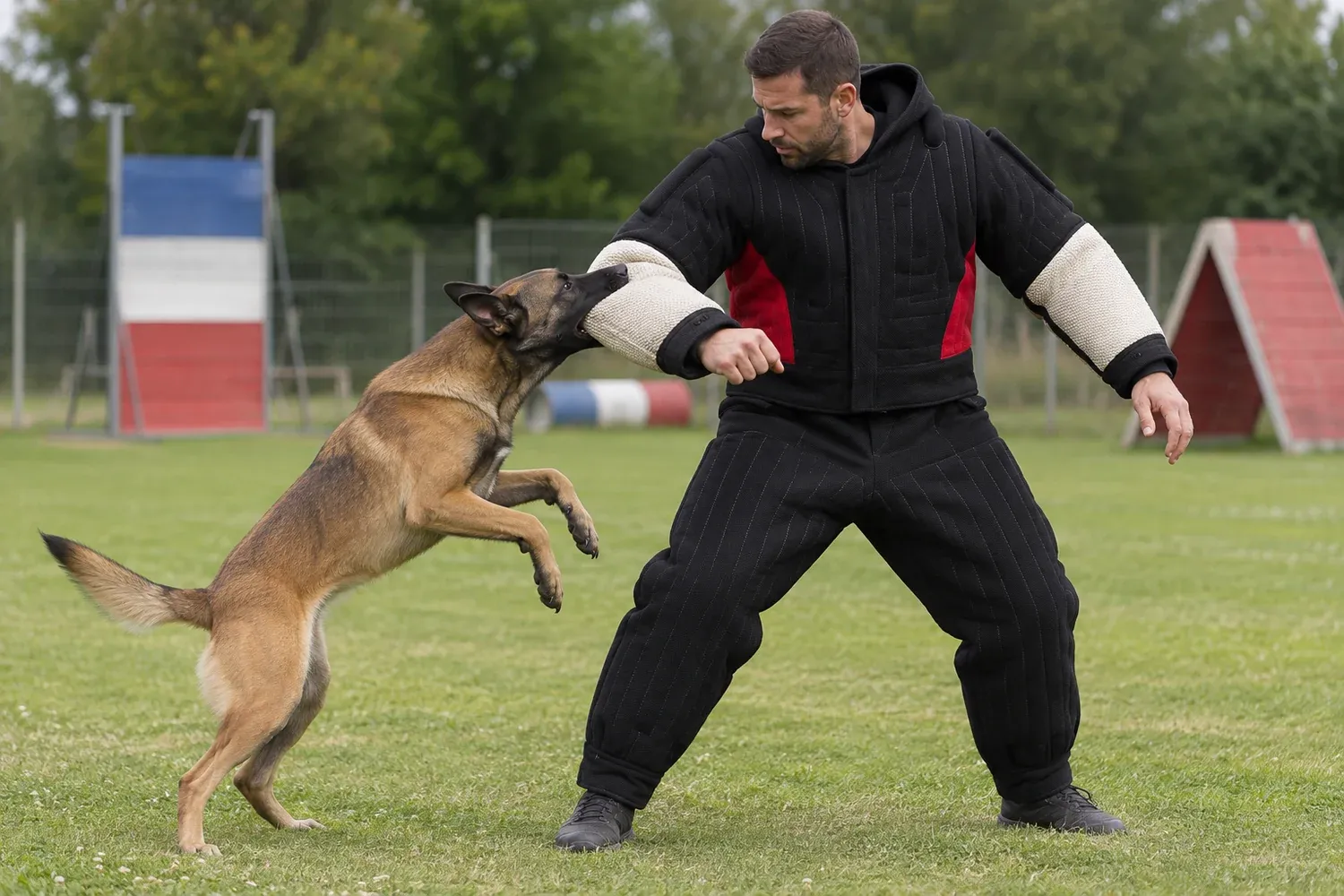
The full bite suit comes last, and that is the point. A suit is for dogs that already grip, hold and commit, and for decoys who already know how to move and present. Buying it early does not speed up training. It only moves the most expensive item in the kit to the front of the queue, where it sits unused for months.
When the time does come, choose the suit by the sport and the dog, not by the catalogue photo. The right choice depends on whether the club trains for IGP, Mondioring, French Ring or KNPV. Our guide to choosing a bite suit by sport compares the options by discipline, and our bite suit measuring guide covers fit and sizing. Poochin does not sell French linen, and the suits in our range use jute and other hard-wearing materials suited to regular club training. Ask for the catalogue and the specifications of each suit before deciding.
When the dogs have outgrown the sleeve, that is the moment to buy, and not before.
What not to buy first
Three buying mistakes show up in almost every first order. The first is the full suit, covered above. The second is a hard trial sleeve bought for a puppy, which punishes the grip it is meant to build. The third is buying one of everything in a single size, which leaves half the kit unused because it fits nobody well.
There is a fourth mistake that is easy to miss: buying cheap copies of the same item three times instead of one good one. Foundation gear gets used hard and often. A wedge that splits at the seam after a month costs more than a better wedge bought once.
Buying for a club: one kit, shared well
A club does not need one of everything per member. It needs one good kit, shared well, with spares of the items that wear out. That means two wedges, a selection of rags and tugs in different sizes, a pillow or two, short pads for new decoys, and a sleeve per working decoy. Suits come later, one at a time, as the dogs earn them.
For a club buying as one order, the starter items can be supplied together, so sizes and spares are planned once rather than pieced together over several orders.
Keep a simple record of what the club owns and what is wearing out. The wedge and the tug are the items to check first, because they take the most punishment. Replace them before they fail, not after.
The starter kit at a glance
Order | Item | What it is for |
|---|---|---|
1 | Bite wedge | First grips, chase and win, decoy presentation practice |
2 | Bite rag and bite tug | Chase drive, grip and holding under light resistance |
3 | Bite pillow and short bite pads | Larger target, full grip, first arm presentation |
4 | Bite sleeve | First protection item, once grip and hold are confident |
5 | Full bite suit | Last, when dogs have outgrown the sleeve |
Start with the wedge, not the suit
A good foundation programme is built in small steps, and the kit should follow the same steps. Start with the wedge, add the rag and the tug, then the pillow and the sleeve, and let the suit wait until the dogs are ready for it. If you are equipping a new club or restocking a foundation programme, ask us for the wholesale catalogue and pricing for the starter kit items. We supply the full kit in one order, with private label options for clubs that want their own branding, and we will help you choose the right sizes.