Working k9
How to Measure for a K9 Bite Suit: A Fitting Guide for Decoys and Training Schools
Learn how to measure for a K9 bite suit: decoy body measurements, dog size as a sizing input, sleeve-to-suit fit, range-of-motion checks, and the fit mistakes to avoid before you order.
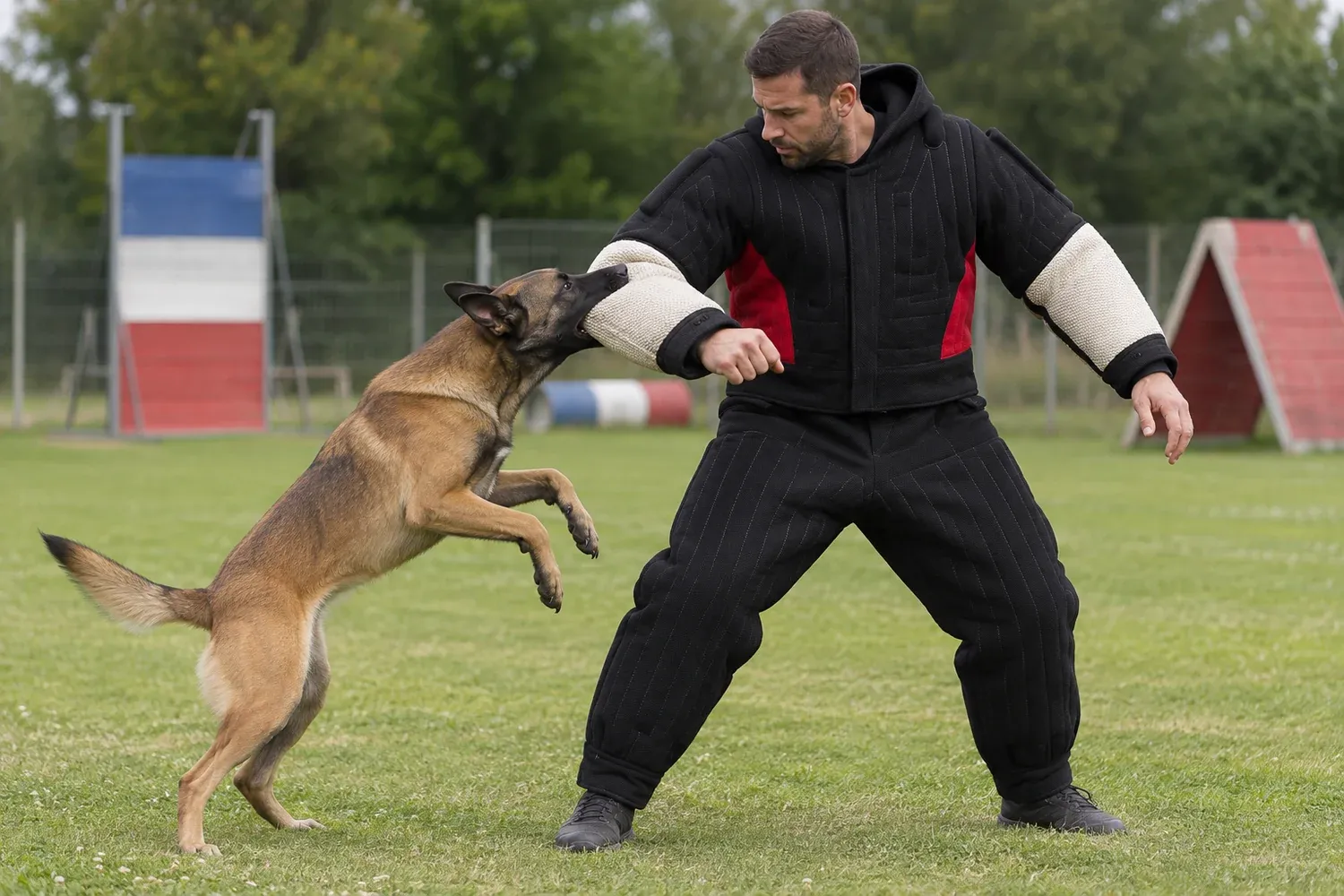
A bite suit that fits well protects the decoy, keeps the dog confident, and lets a training session run the way it should. A suit that fits badly pulls at the shoulders, rides up at the waist, limits the arms, or leaves a gap where the dog is meant to grip.
Fitting a bite suit is not guesswork. It starts with a tape measure, a clear record of the decoy, and an honest description of the dog. This guide covers each measurement, how the dog shapes the choice, and the checks that confirm the fit before an order is placed.
Why Fit Matters More Than Size Labels
Bite suits are sold in sizes, but a size label alone does not guarantee a fit. Two decoys who wear the same jacket size in everyday clothing can need different bite suits. One may have broader shoulders, longer arms, or a longer torso. One may work large, powerful dogs, while the other works younger dogs in short sessions. The suit has to match the body inside it and the work it will do.
A suit that is too tight restricts movement and puts pressure on the shoulders, chest, and hips, so the decoy cannot turn, raise the arms fully, or move backward safely. A suit that is too loose shifts during a bite: the sleeve moves out of position, the jacket rides up, and the trousers catch at the knee. Both faults increase the risk of bruising and strain, and a dog can lose its grip at the wrong moment. For a training school, the cost of a wrong fit is multiplied: one suit that does not fit its main decoy sits unused while another order is placed.
The Decoy Measurements That Matter
Take every measurement over the clothing the decoy will wear under the suit, not over bare skin and not over a heavy winter coat. Stand straight, breathe normally, and keep the tape level. Ask a second person to take the measurements, since self-measured figures are often off by enough to change the size. Start with height and weight, then measure the chest around the fullest part, with the tape level and snug but not tight, and the arms relaxed at the sides.
Measure the waist at the natural waistline and the hips at the widest point. Measure the inseam from the crotch to the ankle bone, standing straight in the footwear used for training, and record the shoulder width across the back. Measure the arm length from the shoulder point to the wrist, with the arm bent slightly as it would be when the sleeve is presented, and measure both arms, since many people have one arm slightly longer than the other. Record the longer figure, plus the neck and the thigh at its widest point. Keep the same units through the whole list.
The Dog Is a Sizing Input, Not an Afterthought
The decoy wears the suit, but the dog decides how the suit is used. A supplier who only receives the decoy measurements has half the picture. The dog breed, weight, height at the shoulder, age, and bite style all shape the choice of suit, the thickness of the padding, and the areas that need the most protection.
Record the breed or the mix and the weight of each dog that will work the suit. A heavy dog that grips and holds puts sustained pressure on the sleeve and the jacket, while a lighter, faster dog that hits and re-grips puts repeated impact on the same area. Note the bite style as well: some dogs grip and hold, some grip, push, and drive forward, and some target the upper arm while others work lower on the sleeve. If the dogs in the team tend to work one area, say so, so the supplier can check that the padding and reinforcement in that area suit the work. For a school with several dogs, list the largest and the smallest dog, not only the average.
How the Sleeve Should Meet the Rest of the Suit
The sleeve is the part of the suit the dog meets first, so its fit deserves its own check. A sleeve that fits well sits firmly on the arm, covers the forearm and upper arm fully, and stays in place when the dog grips and pulls. The jacket should overlap the top of the sleeve with no gap at the shoulder and no bare skin at the wrist.
Check the overlap in a working position, not only with the arms at rest. Raise the arm as if presenting the sleeve, turn the body, and step forward and back. The sleeve and the jacket should move together. If the sleeve slides down the arm, the fit is loose; if the jacket pulls tight across the chest when the arm rises, the shoulder cut is too narrow for that decoy. Ask the supplier how the sleeve attaches to the jacket, whether it can be replaced on its own, and which parts of the suit carry extra reinforcement. The aim is a suit that works as one piece, with no weak point where two parts meet.
Range of Motion: The Test Before You Order
Measurements on paper are the start. Movement is the proof. Before an order is confirmed, the decoy should test the range of motion in the suit. A suit that measures correctly but still limits movement has not passed the test.
Raise both arms overhead, as if presenting the sleeve high. The jacket should not ride up so far that the waist is exposed, and the shoulders should not pull tight. Turn the body left and right. Walk, step back, crouch, and rise again. The trousers should allow a full stride and a deep crouch without pulling at the knee or the waist. Then practice the presentation itself: hold the arm out as if offering the sleeve, pull it back, and step away. Repeat the movement several times, since a suit that feels fine for one presentation but binds on the third is not ready for a full session. Note any point where the suit pulls, pinches, or limits the movement, and send that note to the supplier with the measurements.
What to Send the Supplier
A good order starts with a complete set of information. Send the full measurement list, with the date the measurements were taken and the name of the person they belong to. Add the height and weight, the dog breed and weight range, the bite style, and the type of work the suit will be used for, whether foundation training, regular club work, or test preparation. Include the measurements of each decoy who will share the suit.
Add photos: a front photo and a side photo of the decoy standing straight, in the clothing worn under the suit. Keep the photos simple, well lit, and recent. State the material preference clearly. Poochin supplies bite suits in jute and other existing materials, and the choice of material shapes the feel, the weight, and the care of the suit. Ask the supplier which material suits the climate, the dogs, and the frequency of use, and ask the supplier to confirm the size choice in writing, with the measurement that led to it, before the order is placed.
Common Fit Mistakes
The most common mistake is ordering by everyday clothing size. A decoy who wears a large jacket in daily life may need a different size in a bite suit, because the padding, the cut, and the work are different. Everyday size is a starting point, not a measurement. The second mistake is measuring over the wrong clothing: figures taken over a thick jacket will read larger than the working figure and the suit will arrive loose, while figures taken over bare skin, when the decoy will wear a base layer underneath, will read smaller and the suit will arrive tight.
The third mistake is leaving out the dog. A suit ordered for the decoy alone, with no note of the dog breed, weight, or bite style, may protect the wrong areas or carry padding that does not match the work. The fourth mistake is ignoring the arms: chest and waist get attention, while arm length and shoulder width are skipped, so a suit that fits the body leaves the wrist short or pulls at the shoulder when the arm rises. The fifth mistake is accepting a suit that almost fits: if it binds, rides up, or leaves a gap, say so before full work, and ask the supplier what adjustment is possible.
A Short Checklist Before You Order
Use this checklist once the measurements are taken and before the order is sent. It takes a few minutes and catches most errors.
- Chest, waist, hips, inseam, shoulder width, arm length for both arms, neck, and thigh recorded, with the date and the name of the decoy.
- Height and weight recorded in the same units as the rest of the list.
- Dog breed, weight range, height at the shoulder, age, and bite style recorded, with the largest and smallest dog noted.
- Type of work recorded: foundation training, regular club work, or test preparation, and how often the suit will be used.
- Material preference stated, with the climate and frequency of use described.
- Front and side photos taken recently, in the clothing worn under the suit.
- Supplier confirmation of the size choice requested in writing, with the measurement that led to it.
If any item on the list is missing, fill it in before the order goes out. A complete order is faster to process, easier to check on arrival, and far more likely to fit on the first try.
Frequently Asked Questions
How long should measuring take?
A full set of measurements takes only a few minutes with a second person helping. Allow extra time for the range-of-motion checks and the photos. The whole process is short, and it is the part of the order that most often decides whether the suit fits.
Can one bite suit fit several decoys?
A suit can be shared if the decoys are close in height, build, and arm length. When the decoys differ by more than a small margin in any of those figures, a shared suit will fit one person well and the others poorly. For a school, record each decoy separately and ask the supplier whether one suit can cover the range.
Should the suit be ordered loose to allow for growth or extra layers?
No. A loose suit shifts during a bite and leaves gaps. Order to the measurements taken over the clothing that will be worn under the suit. If the decoy plans to wear an extra layer in cold weather, measure over that layer and note it in the order.
What if the measurements fall between two sizes?
Send both sets of figures to the supplier and ask which size the supplier recommends, with the reason. The answer depends on the cut of the model, the build of the decoy, and the dogs that will work the suit. Do not guess between sizes without asking.
What should be checked when the suit first arrives?
Try the suit on over the usual underlayers, check the sleeve-to-jacket overlap with the arms raised, walk, crouch, turn, and present the sleeve several times. Note any point where the suit pulls, pinches, or shifts, and contact the supplier before the suit is used in full work.
Closing
A bite suit is protective equipment, and its protection depends on its fit. Measure with care, and test the range of motion before the suit goes into full work. If you are choosing bite suits for a decoy team or a training school, request the catalogue and ask about private-label options. Poochin supplies bite suits, sleeves, and related working dog gear, and can help match a suit to your team. Contact the team here: Contact Us.