Working k9
IGP, Mondioring, French Ring or KNPV: How to Choose the Right Bite Suit for Your Sport
IGP, Mondioring, French Ring and KNPV ask different things from a bite suit. Compare bite style, decoy movement and fit before you order.
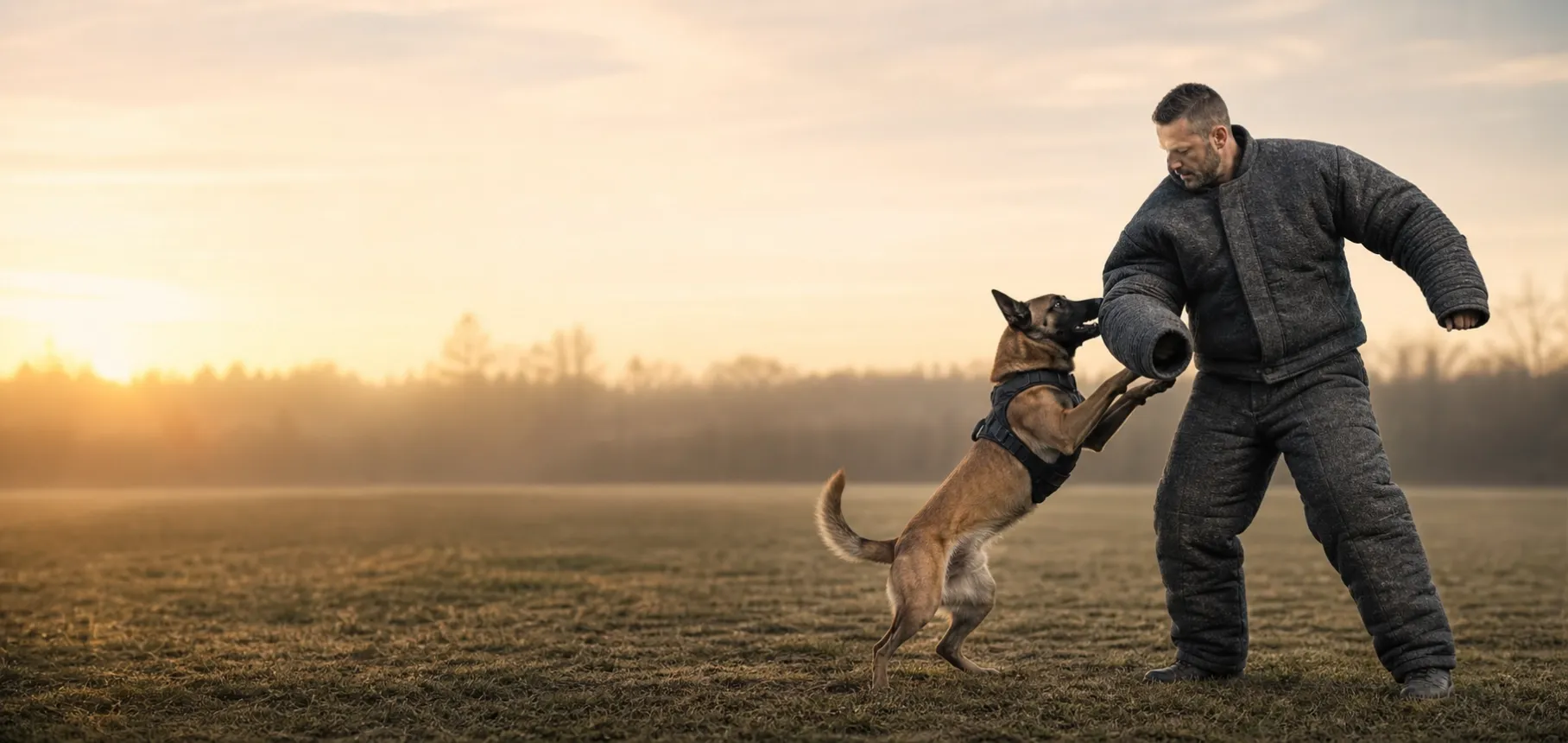
A bite suit looks like a bite suit until a dog hits it at full speed. Then the differences show. A suit that works well for one sport can slow a decoy down in another, leave a gap where the dog is trained to bite, or wear out in a place the buyer did not expect. A suit that does not match the sport means cancelled sessions and a dog that learns to target the wrong area. The four sports in this guide ask different things from the same piece of equipment, and a buyer who understands those differences before ordering will choose a suit that lasts longer and trains better.
Why the sport changes the suit
Three factors decide whether a suit fits a sport: where the dog is expected to bite, how the decoy is expected to move, and how much protection the decoy needs where impact repeats. In some sports the bite lands in a narrow, predictable zone. In others the dog may target the arms, legs, torso or back. A suit built for a narrow bite zone leaves a decoy exposed when the dog targets a wider area, while maximum coverage can restrict movement.
Weight works the same way. A heavier suit absorbs impact but slows the decoy down. A lighter suit allows faster movement but may protect less where the dog bites hardest. Fit is the factor buyers underestimate most often. A loose suit shifts when the dog bites and changes the bite picture. A tight suit restricts the decoy and wears through faster at the seams. The decoy must be able to run, turn, crouch, fall and get up again, so measure the decoy who will actually wear the suit and check the measurements against the size guide for the exact model.
IGP: precision in a narrow bite zone
IGP, formerly known as IPO or Schutzhund, is built around control and precision. In competition the helper wears a sleeve, not a full suit, and the dog is expected to grip the sleeve firmly and calmly. Full suits still help in IGP training, giving the helper more protection than a sleeve alone for entries, drive and grip work. The bite zone is narrow: the dog targets the sleeve area while the helper works in mostly straight lines, presenting the sleeve, taking the grip, and driving forward or holding position.
Buyers who equip an IGP group should look for a suit with strong arm protection, a secure and comfortable fit through the shoulders, and enough freedom in the legs for running and turning. A heavy, fully padded suit built for bites all over the body is more than an IGP helper needs, and the extra weight will slow the helper down during the send and the drive. A lighter suit with solid arm and torso protection usually serves an IGP training group better. A full suit is a training tool in IGP, not a trial garment, so buy it for the training sessions it will serve and keep the competition sleeve separate.
Mondioring: full-body bites and a moving decoy
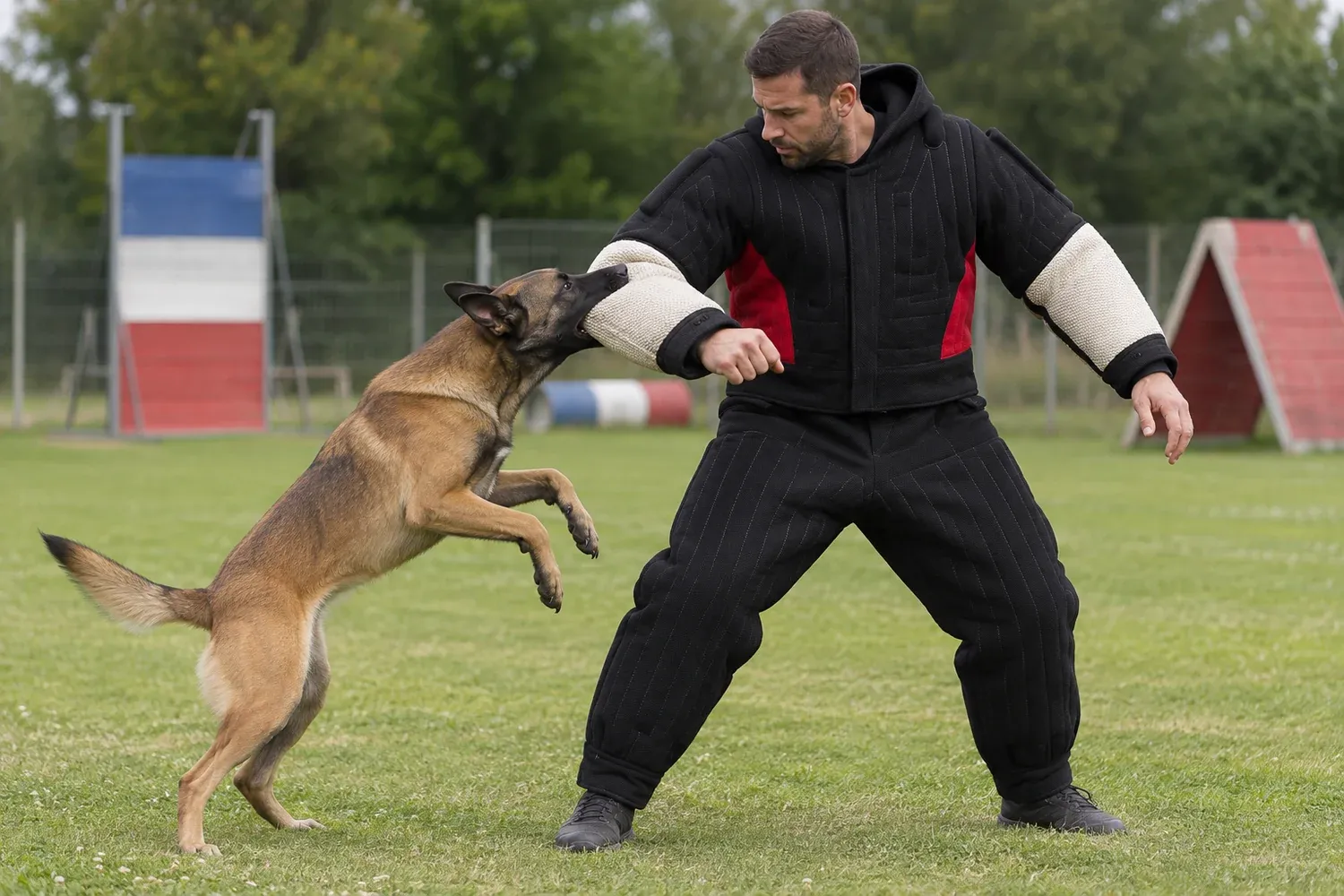
Mondioring asks more from a bite suit than any other sport in this guide. The decoy wears a full suit, the dog may bite the suit anywhere, and the decoy moves throughout the exercise: running, turning, crouching, falling and getting up again. A Mondioring suit must therefore protect the whole body, not only the arms. The legs, torso and back all take bites, and any thin or unprotected area will be found quickly by a strong dog. The suit must still allow the decoy to move freely: a suit that locks the shoulders or hips leaves the decoy unable to perform the exercise.
Buyers who equip a Mondioring group should prioritise full-body coverage, flexible joints at the shoulders, hips and knees, and a fit that stays in place when the decoy falls and rolls. The material should resist tearing where the dog grips repeatedly, and the seams should be built to hold under that load. Jute gives the dog a firm, clear grip and stands up to repeated biting, and it is the material Poochin supplies for bite work. Mondioring groups wear suits out faster than most, so inspect the bite zones regularly and retire a suit when the protection thins, rather than waiting for a tear.
French Ring: speed, evasion and sudden changes
French Ring shares the full suit with Mondioring, but the decoy work is different. The French Ring decoy is expected to be fast, athletic and unpredictable, running, dodging and changing direction to test the dog's grip. The suit must protect the decoy during all of that while adding as little drag as possible. Weight and flexibility matter more here than in any other sport: a heavy or stiff suit limits the dodges and turns that define French Ring.
Bites in French Ring can land on the arms, legs or torso, so coverage must still be complete. The difference from Mondioring is one of emphasis: Mondioring rewards a suit that can take punishment from every angle while the decoy works through the exercise, while French Ring rewards a suit that can take the bite and still let the decoy move at speed. Look for a suit that flexes at the shoulders, waist and knees, and keep a second suit in rotation if the group trains several times a week, so no single suit takes every session.
KNPV: power, pressure and a working dog
KNPV, the Dutch police dog programme, trains dogs for real operational work. The bite work is powerful and direct, and the decoy takes hard, committed bites from large, strong dogs. The suit must absorb that pressure without passing it through to the decoy. Protection is the priority in KNPV, ahead of speed. A KNPV suit should offer dense, well-distributed padding through the arms, torso and legs.
The leather-lined suit in the Poochin range suits this kind of work, because the lining adds structure and durability where repeated bites land. The fit must be secure enough that the suit does not shift under a hard bite, because a shifting suit alters where and how the dog grips and increases the risk of injury. The decoy often takes bites several times a week, so the suit must fit well enough for long sessions. Measure carefully and order for the decoy who will wear it most often.
Material, construction and care
Whatever the sport, the material decides how long the suit lasts and how the dog experiences the bite. Jute is the material most buyers in this market know best: it gives a firm grip, it holds its shape, and it stands up to repeated biting when the suit is built well. Leather-lined suits add durability in the areas that take the most punishment. Each material has its place, and the right choice depends on the sport, the dogs and the frequency of use.
Construction matters as much as material. Look at the seams in the bite zones, the closures at the wrists and ankles, and the reinforcement where the dog grips. A suit with strong fabric but weak seams will fail at the seam first. Care extends the life of any suit: brush off dirt after each session, let the suit dry fully before storage, and store it in a dry place away from direct sunlight. Inspect the bite zones, seams and closures regularly, and repair small damage early.
Common mistakes when ordering for a sport
The most common mistake is ordering by price alone. A cheaper suit that does not match the sport will cost more in the end, because it will be replaced sooner or left unused. The second mistake is choosing a suit for the sport the club hopes to start, rather than the sport it actually trains. Order for the sessions on the calendar now, and add a second suit when the group genuinely expands into another sport.
A third mistake is ignoring the trial rules. Before ordering, confirm the current rules with the governing body for the sport, so the suit matches what the decoy is allowed to wear. Finally, confirm the material before ordering. Poochin supplies jute, canvas and leather-lined bite suits and does not sell French linen, so choosing among the three materials Poochin carries keeps the order inside the range it can supply and support.
Which suit for which sport
Sport | Bite zone | Decoy movement | Suit priority |
|---|---|---|---|
IGP | Narrow, sleeve area in training | Straight lines, drive forward | Strong arm protection, light enough to run |
Mondioring | Whole body | Running, falling, rolling | Full-body coverage with flexible joints |
French Ring | Arms, legs, torso | Fast, dodging, changing direction | Mobility first, complete coverage second |
KNPV | Hard, committed bites | Direct, high pressure | Maximum protection, secure fit |
Before you order: a short checklist
- Confirm the sport and the current rules with the governing body.
- Measure the decoy who will wear the suit most often.
- Check the bite zones of the sport against the protection of the suit.
- Choose the material from the range actually supplied: jute, canvas or leather-lined.
- Plan for a second suit in rotation if the group trains several times a week.
- Ask for the catalogue and a quotation for the models that match the sport.
Frequently asked questions
Can one suit serve two sports?
Often yes, if the sports are close in bite style and movement. A suit chosen for Mondioring will usually cover French Ring training, and a suit chosen for French Ring will usually cover Mondioring, but check the fit and the bite zones for each sport before deciding. A suit chosen for IGP training will not always cover Mondioring, because the bite zone is much wider.
Does a heavier suit always protect better?
Not always. A heavier suit absorbs more impact, but it also slows the decoy down and tires the decoy faster. The best suit is the one that protects the bite zones of the sport while still allowing the decoy to move the way the exercise requires.
How do we order a suit for a whole club?
Measure each regular decoy, order for the person who will wear the suit most often, and consider a second suit in a different size if the group has decoys of very different builds. A single suit shared by many wearers will fit none of them well.
What if our club is starting a new sport?
Order for the sport the club trains now. When the group genuinely begins training the new sport, add a suit that matches it, rather than buying one suit that serves neither sport well.
Call to Action
If your club or school is choosing a bite suit for IGP, Mondioring, French Ring or KNPV, send Poochin the sport, the size of the decoy who will wear the suit, and the models you are considering. Poochin will send the catalogue and a quotation for the suits that match the sport, and can help you pair matching sleeves, tugs and training accessories from the same range. Send the details through the Poochin contact page.