Working k9
What Is Mondioring? Bite Suit Guide for Decoys
Discover how Mondioring combines obedience, jumping and protection work, and what decoys should consider when choosing a professional bite suit.
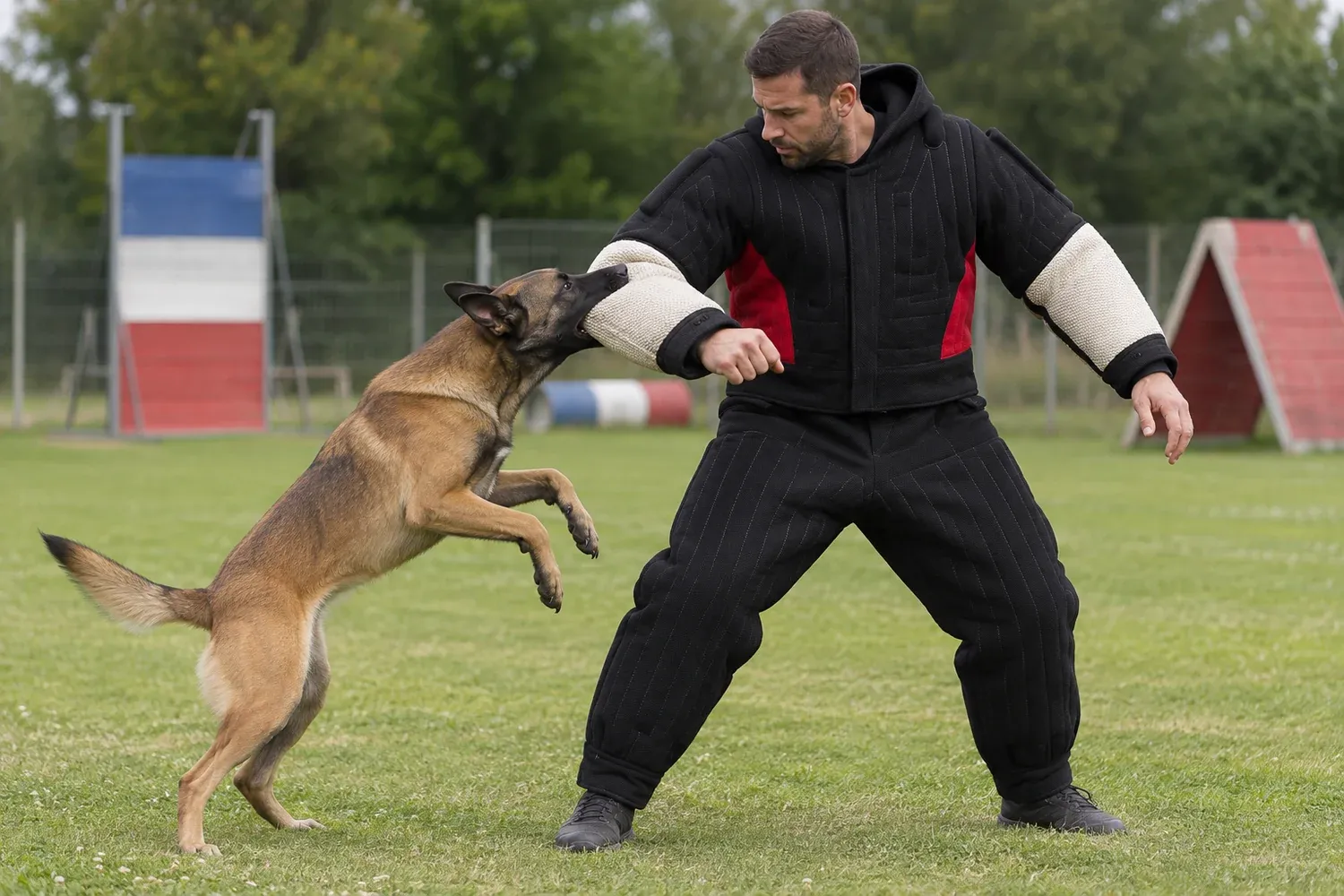
What Is Mondioring? Understanding the Sport and Its Bite Suit Requirements
Mondioring combines obedience, jumping and protection exercises in changing scenarios. Learn how the sport works and why bite suit fit, mobility and protection matter for decoys.
What Is Mondioring? Understanding the Sport and Its Bite Suit Requirements
Mondioring is an international working dog sport that combines obedience, jumping and protection exercises. It challenges dogs and handlers to perform in changing environments while maintaining control, confidence and teamwork.
Unlike training routines performed in the same setting every time, Mondioring competitions introduce different themes, obstacles and distractions. Dogs must remain responsive to their handlers even when the environment changes.
For anyone involved in working dog training, understanding Mondioring also helps explain why specialized equipment, particularly full-body bite suits, plays an important role in protection exercises.
1. The Three Main Parts of Mondioring
Mondioring evaluates a dog's abilities through three main categories.
Obedience
Obedience exercises assess how reliably a dog responds to its handler. These may include heeling, position changes, retrieving and other controlled tasks performed around distractions.
Jumping
Jumping exercises test athletic ability and coordination. Depending on the competition level, dogs may be required to complete different types of jumps.
Protection
Protection exercises involve a trained decoy who interacts with the dog under defined competition rules. The exercises evaluate qualities such as control, engagement and the dog's ability to respond to commands during demanding situations.
These three categories make Mondioring more than a test of biting ability. A successful team needs physical fitness, consistent training and reliable communication between dog and handler.
2. The Role of the Decoy in Mondioring
The decoy, sometimes called the helper or figurant, plays an essential role in Mondioring protection exercises.
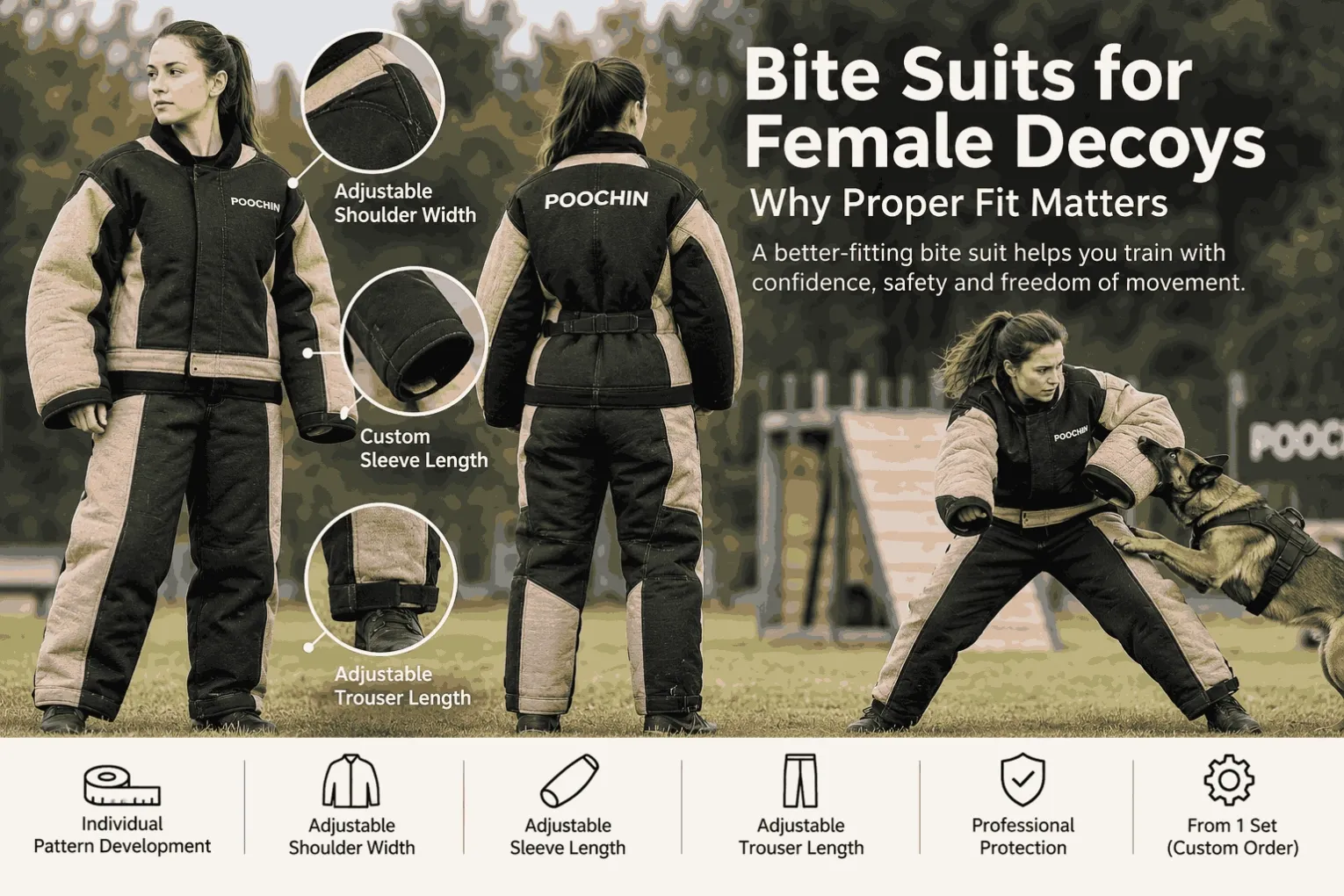
Unlike training formats that primarily use a bite sleeve as the target, Mondioring protection work involves a decoy wearing a full-body protective bite suit.
The suit provides designated biting surfaces on the arms and legs while allowing the decoy to move through the exercise.
A skilled decoy must understand dog behavior, maintain controlled movements and work within the sport's rules.
This places specific demands on the equipment.
A bite suit needs to provide appropriate protection without unnecessarily restricting the decoy's movement. Poor fit, excessive bulk or limited joint flexibility can make training more difficult.
For this reason, selecting a bite suit involves more than choosing a fabric or a size.
3. What Makes a Suitable Mondioring Bite Suit?
A professional Mondioring bite suit must balance protection, mobility, fit and durability.
Protective Construction
Bite-resistant outer materials, internal padding and reinforced areas work together to provide protection during controlled training. The construction should be evaluated according to the intended application and training intensity.
Freedom of Movement
Decoys need to run, turn, bend and change positions. A suit that restricts shoulder, elbow, hip or knee movement can interfere with these activities.
Proper Fit
Shoulder width, sleeve length, chest measurements and trouser length all affect how a suit feels during training.
A standard size may not fit every decoy equally well. Custom sizing can be particularly useful when the wearer falls outside standard proportions.
Reinforced Stress Areas
Repeated training places stress on seams, joints and frequently contacted areas. Material selection and reinforcement methods are therefore important considerations.
Weight and Comfort
A heavier suit is not automatically better. Overall weight needs to be considered alongside protective construction, flexibility and the decoy's physical requirements.
The most suitable design depends on the training environment, the wearer and the intended level of use.
4. Choosing the Right Bite Suit for Your Training Needs
Before purchasing a Mondioring bite suit, it helps to clarify several practical requirements.
First, consider the intended training activities and the experience level of the decoy.
Next, review the suit's construction, including its outer fabric, internal padding, reinforced areas and overall flexibility.
Fit is equally important. Height alone is not enough to determine the correct size. Shoulder width, chest circumference, arm length and trouser measurements can provide a more useful starting point.
For clubs and equipment distributors, it may also be worth evaluating a sample before committing to larger quantities.
Bite Suit Customization at POOCHIN
POOCHIN supplies working dog bite training equipment, including full-body bite suits for professional training applications.
Depending on the design, customization can include sizing adjustments and selected construction details. For buyers requiring a different fit, we can discuss measurements and sample development before production.
Conclusion
Mondioring combines athletic performance, obedience and controlled protection work. The demands placed on dogs, handlers and decoys make equipment selection an important part of training preparation.
A suitable bite suit should balance protection, movement and fit rather than focusing on one feature alone.
Looking for a professional bite suit or exploring a custom design?
Contact POOCHIN with your training application, preferred suit style and body measurements to discuss available options.