Oct 31, 2026Working k9
K9 Bite Sleeve Design: Protection vs. Bite Experience
Learn how internal inserts, bite surfaces and sleeve flexibility affect K9 bite sleeve design, handler protection and practical training.
K9 Bite Sleeve Design: Balancing Handler Protection and Natural Bite Experience
A professional K9 bite sleeve needs to do more than withstand repeated bites. It also needs to provide a suitable biting surface for the dog and allow the handler or decoy to work comfortably during training.
However, these requirements can sometimes create design challenges.
One common example is the use of rigid internal inserts. While they can provide additional structural protection for the handler's arm, their stiffness may also influence how a dog grips the sleeve and how comfortable the equipment feels during practical training.
So, how should manufacturers balance handler protection, bite experience and ease of use?
Let's take a closer look at the key design considerations.
1. Why Do Some Bite Sleeves Have Rigid Internal Inserts?
Internal protective structures are used in some professional bite sleeves to help protect the handler's arm during training.
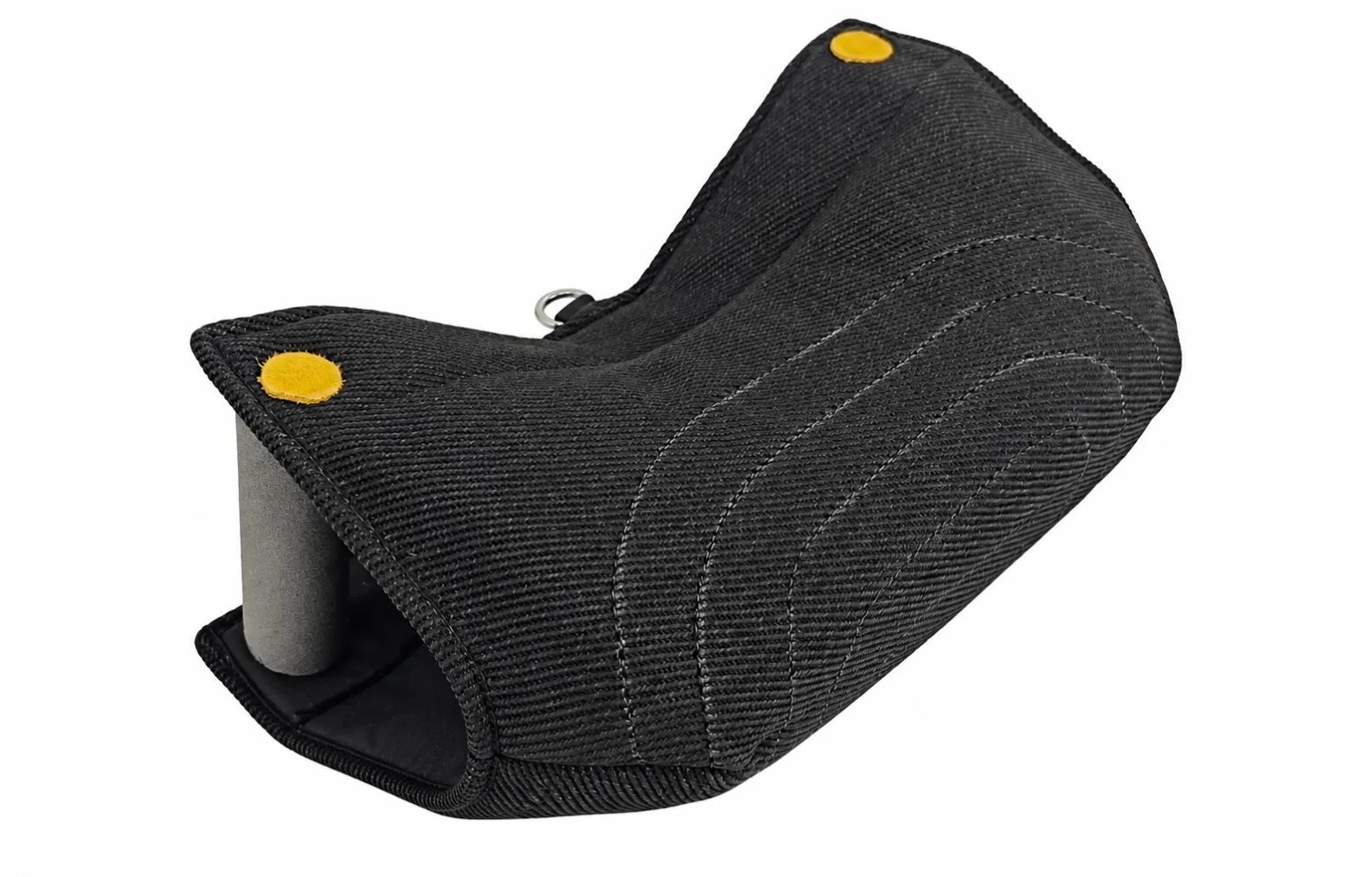
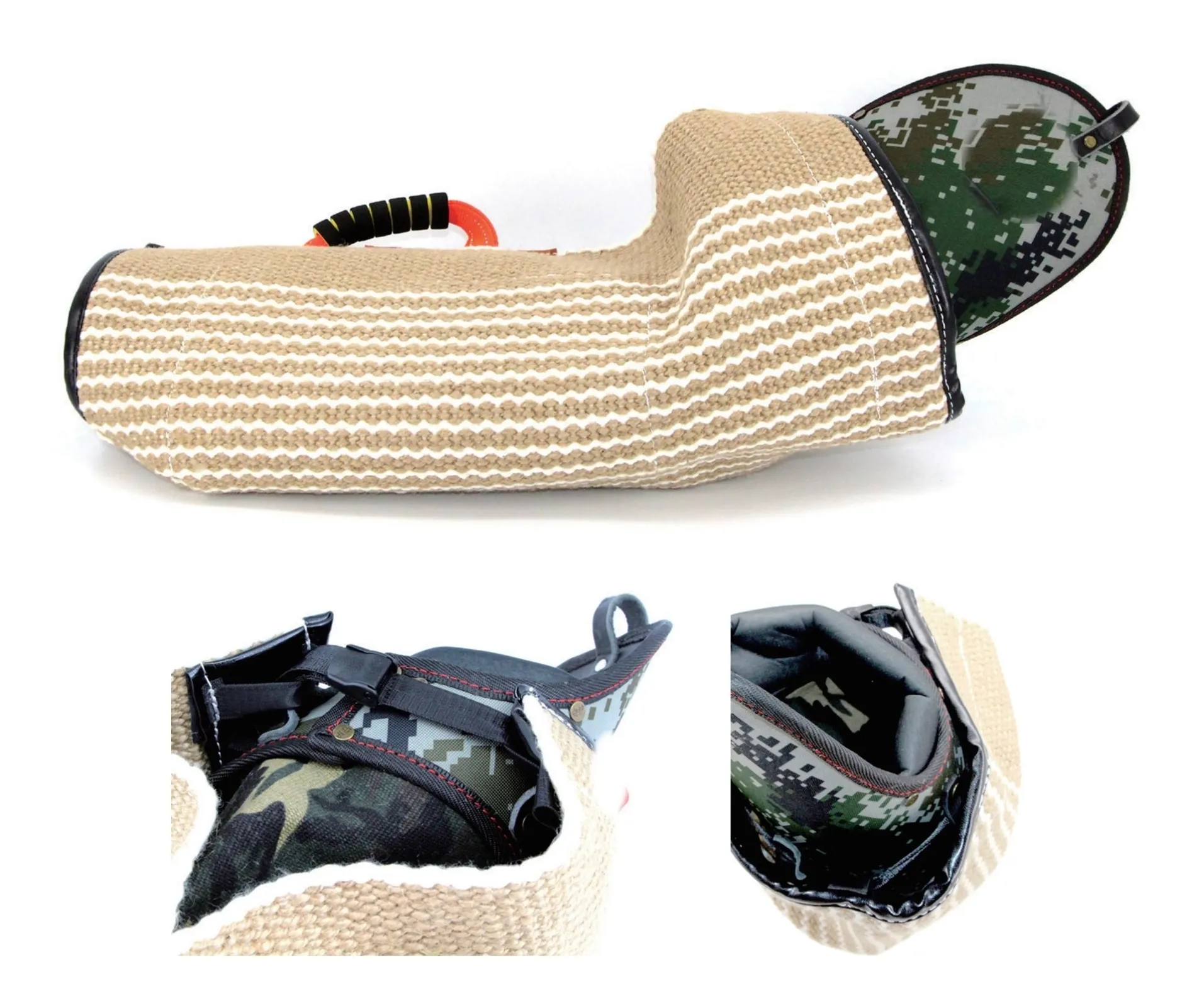
For example, a rigid plastic insert can provide a physical barrier between the dog's bite and the handler's arm.
This type of construction is particularly relevant when equipment is intended for training with large or powerful dogs.
However, adding a rigid insert also changes the overall structure of the sleeve.
Depending on its material, thickness, shape and position, it may affect:
- How the sleeve responds when bitten
- The feel and firmness of the biting surface
- How easily the dog can establish a comfortable grip
- The handler's ability to position and move the sleeve
This is why internal protection should not be evaluated independently from the complete sleeve design.
A structure that provides additional physical protection does not automatically deliver the best training experience for every dog or handler.
2. Natural Bite Experience vs. Handler Protection
One of the challenges in bite sleeve development is finding the right balance between protection and bite performance.
A sleeve that is too rigid may not provide the biting experience expected by some trainers. On the other hand, reducing internal protection without proper evaluation may compromise the intended protective function.
These two aspects need to be considered together.
What Should Be Evaluated?
Bite surface response
The outer material and internal structure work together to determine how the sleeve feels when the dog makes contact and grips it.
Internal structure
The stiffness, thickness and positioning of the protective insert can influence the overall flexibility of the sleeve.
Handler comfort
The sleeve should allow the handler to maintain a practical working position and control the equipment during training.
Protection requirements
The intended dog size, training intensity and application should all be considered when selecting the protective structure.
There is no single construction that is necessarily suitable for every training environment.
3. Why Private Dog Owners and Professional Trainers May Need Different Designs
Not every bite sleeve is used in the same training environment.
Professional decoys and experienced trainers may have different expectations from private dog owners who are developing their dogs' bite work skills.
For professional training environments, handler protection, structural durability and compatibility with established training methods may be major considerations.
For private dog owners, ease of handling, comfort and a suitable bite experience may receive greater attention.
This does not mean that one group needs less protection. Rather, the product design should reflect how the equipment will actually be used.
Before choosing a bite sleeve, buyers should consider:
- Who will use the sleeve?
- What size and strength of dog will be involved?
- What type of bite training is intended?
- How much internal protection is required?
- What level of flexibility and handling comfort is expected?
Understanding these requirements before production can help avoid costly design changes later.
4. Why Practical Testing Matters Before Finalizing a Bite Sleeve
A bite sleeve may look suitable in product photographs and specifications, but its actual performance needs to be evaluated in practical training conditions.
When developing or customizing a bite sleeve, it is important to assess the complete construction rather than focusing on one material alone.
Useful evaluation areas include:
- The interaction between the outer bite cover and internal protective structure
- The flexibility and response of the sleeve during controlled training
- Handler comfort and ease of positioning
- The condition of seams, fastening points and reinforced areas
- Whether the design meets the intended training and protection requirements
Changes to rigid inserts, padding or outer materials should be evaluated as a complete design modification, not treated as isolated improvements.
Conclusion: Good Bite Sleeve Design Starts with Understanding the User
A professional K9 bite sleeve is not simply a combination of durable fabric and protective inserts.
Its design needs to consider the dog, the handler and the intended training environment together.
At POOCHIN, we believe that understanding real training requirements is an important part of developing practical K9 equipment.
Whether you are looking for a standard bite sleeve or exploring a customized design, discussing the intended application, dog characteristics and handler requirements before production can help identify a more suitable solution.
Looking for a K9 bite sleeve for your training program?