Oct 21, 2026Working k9
K9 Bite Pillow Materials & Durability Guide | POOCHIN
Learn how training stage, jute and canvas materials, construction, and training intensity affect K9 bite pillow selection and durability.
How to Choose a K9 Bite Pillow: Training Stage, Material and Durability
When choosing a bite pillow for working dog training, buyers often focus on one question: How durable is it?
Durability matters, but it is not the only factor. A bite pillow designed for early bite development may look similar to one intended for more demanding training, even though their construction and intended use can be quite different.
Understanding these differences can help trainers and equipment buyers choose a more suitable product.
1. Start with the Dog's Training Stage
Not every bite pillow is designed for the same type of training.
Some pillows are intended for puppies and young dogs during early bite development. They may be used to encourage gripping, build confidence, and introduce controlled bite exercises.
Other models are intended for more demanding working dog training, where repeated gripping, pulling, and stronger bite forces place greater stress on the equipment.
A puppy training pillow should not automatically be treated as a professional bite pillow simply because the two products have a similar shape.
The first question should be: What type of training will this pillow be used for?
2. Material Matters, but Construction Matters Too
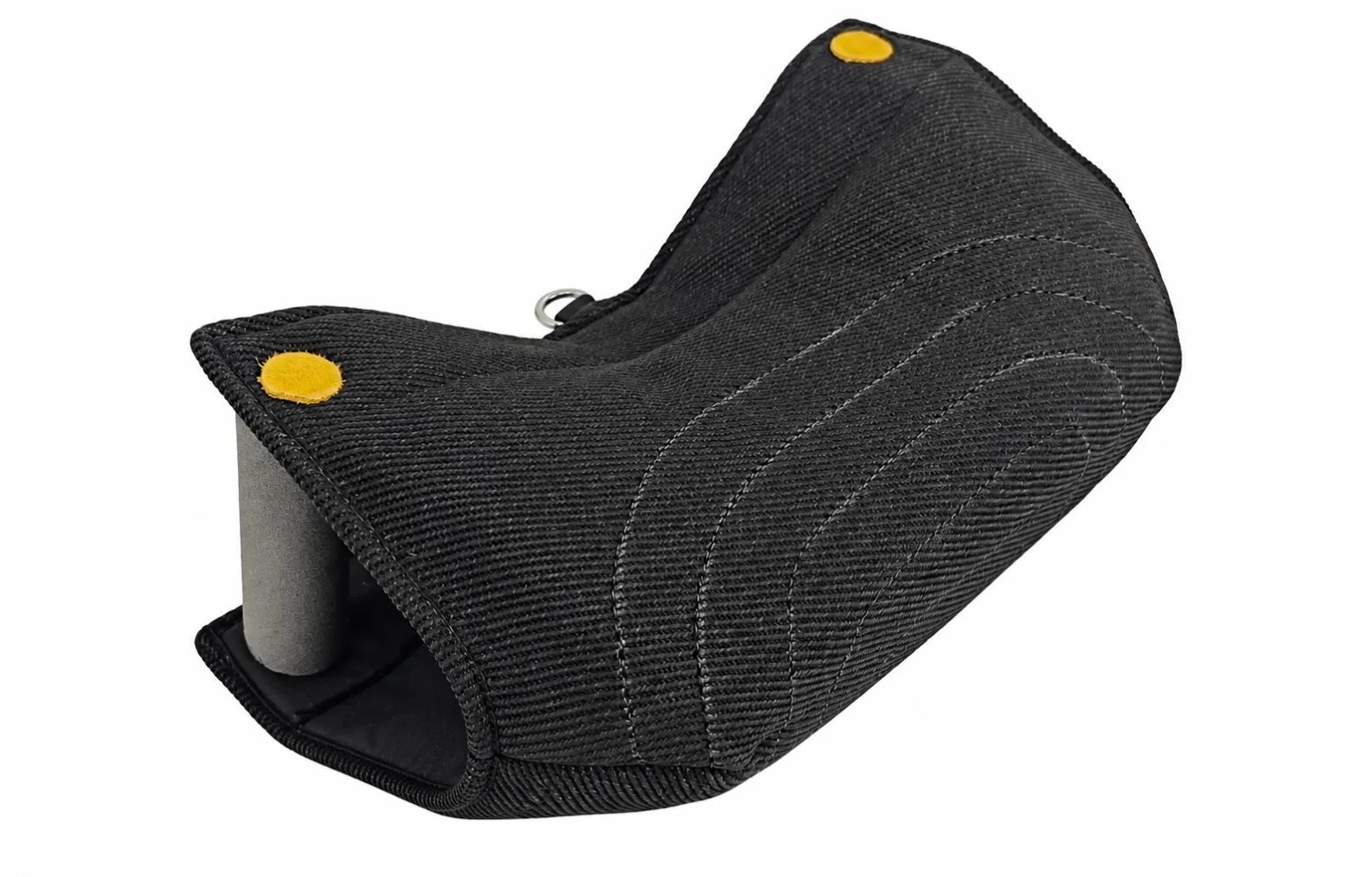
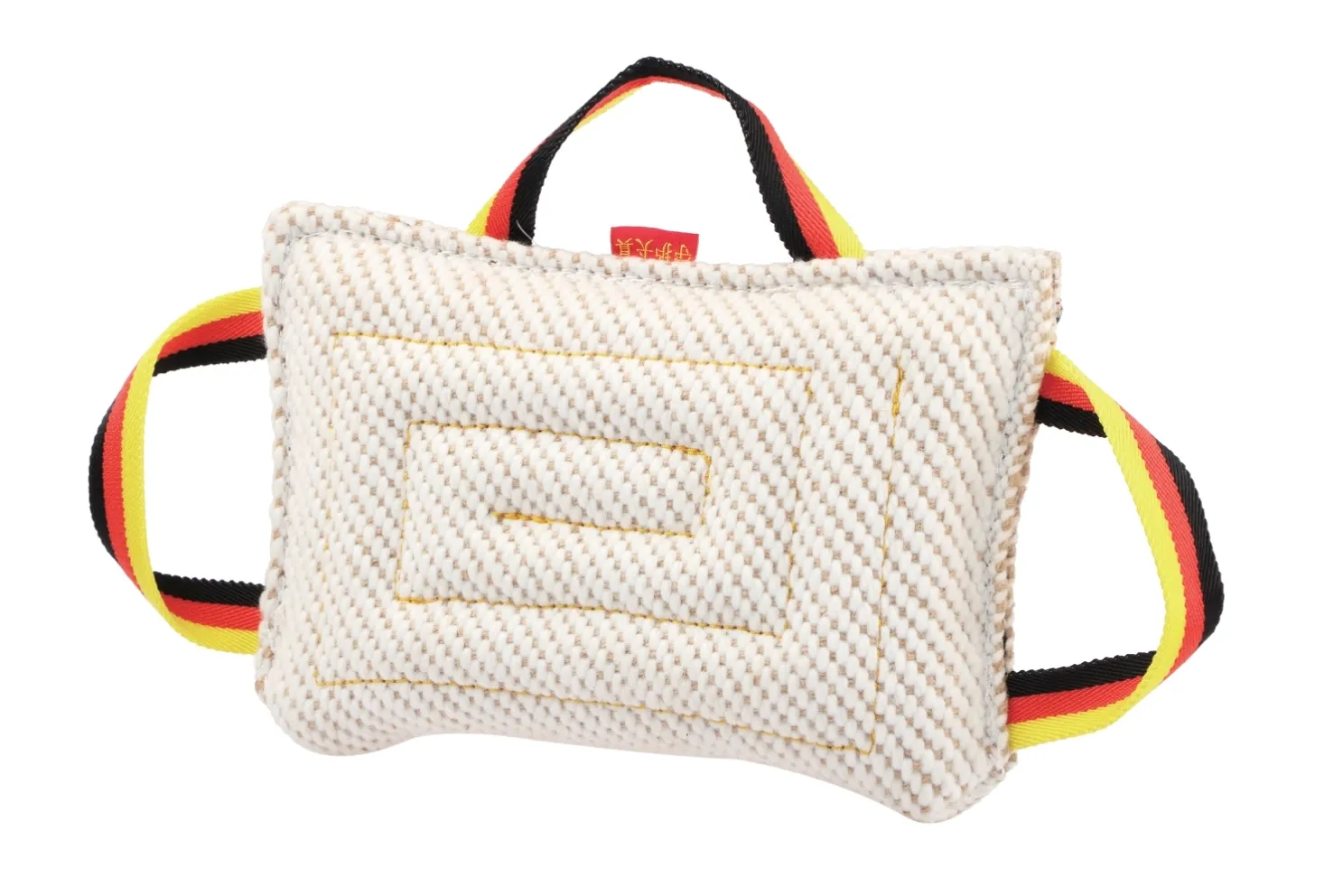
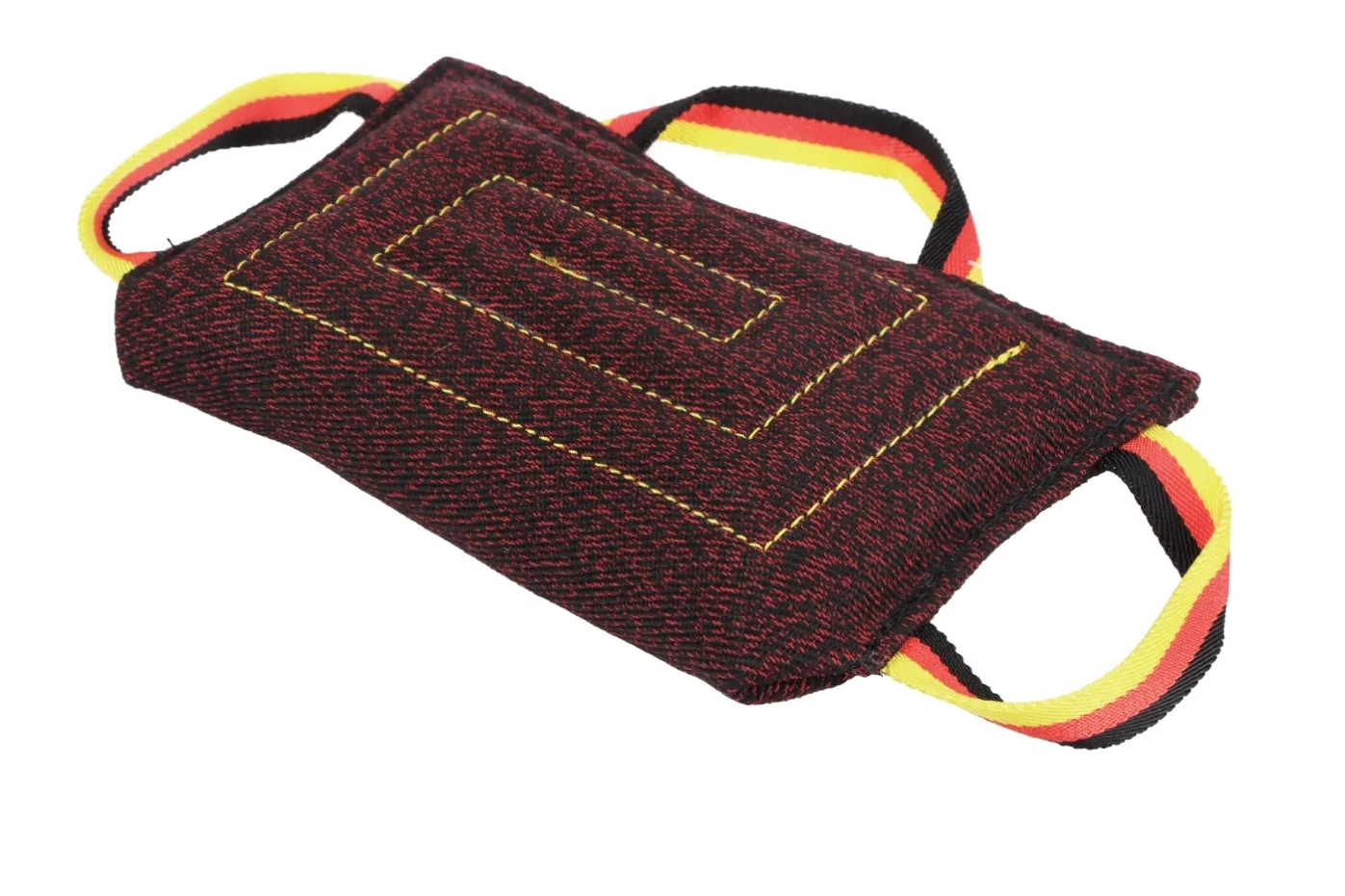
Bite pillows can be made with different outer fabrics, including jute, canvas, and synthetic bite-resistant textiles.
In our discussions with suppliers, one practical observation came up: a jute model may offer better resistance to biting and pulling than a particular canvas model intended for lighter training.
However, this does not mean every jute pillow is stronger than every canvas or synthetic pillow.
Durability also depends on:
- The construction and density of the outer fabric
- Internal filling and padding
- Stitching and seam construction
- Handle attachment
- The way the pillow is gripped and pulled during training
Two pillows with similar dimensions may perform differently because of these construction details.
3. No Bite Pillow Is Indestructible
Even equipment intended for professional training is subject to wear.
Repeated gripping, pulling, and friction can gradually damage the outer material, seams, or handles.
How quickly this happens depends on the dog's training level, the intensity and frequency of use, and how the equipment is handled.
For this reason, it is difficult to promise a fixed product lifespan based only on a dog's age or breed.
Trainers should regularly inspect bite pillows and stop using equipment when damage could make it unsafe.
4. Why Sample Testing Is Important
For distributors and private-label buyers, selecting a bite pillow from photos alone can be difficult.
A sample allows the buyer to evaluate practical details such as:
- Whether the shape suits the intended exercises
- How the dog grips the surface
- Whether the firmness is appropriate
- How the fabric and stitching respond to repeated use
- Whether the handle arrangement works for the trainer
When changing from jute to a different fabric, or modifying the pillow's shape or construction, another sample test may be necessary.
A familiar design does not guarantee identical performance after the materials have changed.
5. What Should Buyers Confirm Before Ordering?
Before selecting or customizing a K9 bite pillow, we recommend confirming the intended training stage, the dog's approximate size and experience, the preferred outer material, pillow dimensions, handle configuration, and expected training intensity.
For custom orders, photos or a physical reference sample can also help clarify the required construction.
Choosing the Right Bite Pillow with POOCHIN
At POOCHIN, we work with buyers looking for working dog training equipment, including bite pillows and training tugs.
If you are sourcing equipment for a training club, distributor, or private-label product range, share your intended training application and product requirements with us.
We can discuss suitable existing designs and available customization options.