Hidden Sleeve vs Standard Bite Sleeve: When to Use Each
A hidden sleeve and a standard bite sleeve look similar but train different things. When the hidden sleeve is the right tool, when the standard sleeve is, and how to move between them.
A standard bite sleeve and a hidden sleeve both protect the same arm, and both are bitten by the same dog. From the outside, the difference can be hard to see — one is worn over the arm and looks like a sleeve, the other is worn under a jacket and is barely visible. But the two tools teach the dog different things, and using the wrong one at the wrong stage can undo good training.
The standard sleeve is the visible target. The dog sees it, targets it, and learns to bite it with commitment. The hidden sleeve is the invisible target. The dog does not see it, and must bite the person — the arm, the body, the place the trainer presents — trusting that the protection is there. One teaches the dog where to bite. The other teaches the dog to bite without a visible target, which is what real protection work demands.
This guide explains what each sleeve is, when to use it, how the dog should move between them, and what to check before every session. It is written for trainers, decoys, clubs, and schools that buy sleeves for their own use or for a team. Bite work should only be taught by an experienced decoy and trainer. Never improvise protection training at home.
For how to choose a standard sleeve in the first place, see: https://www.poochin.com/posts/how-to-choose-a-k9-bite-sleeve
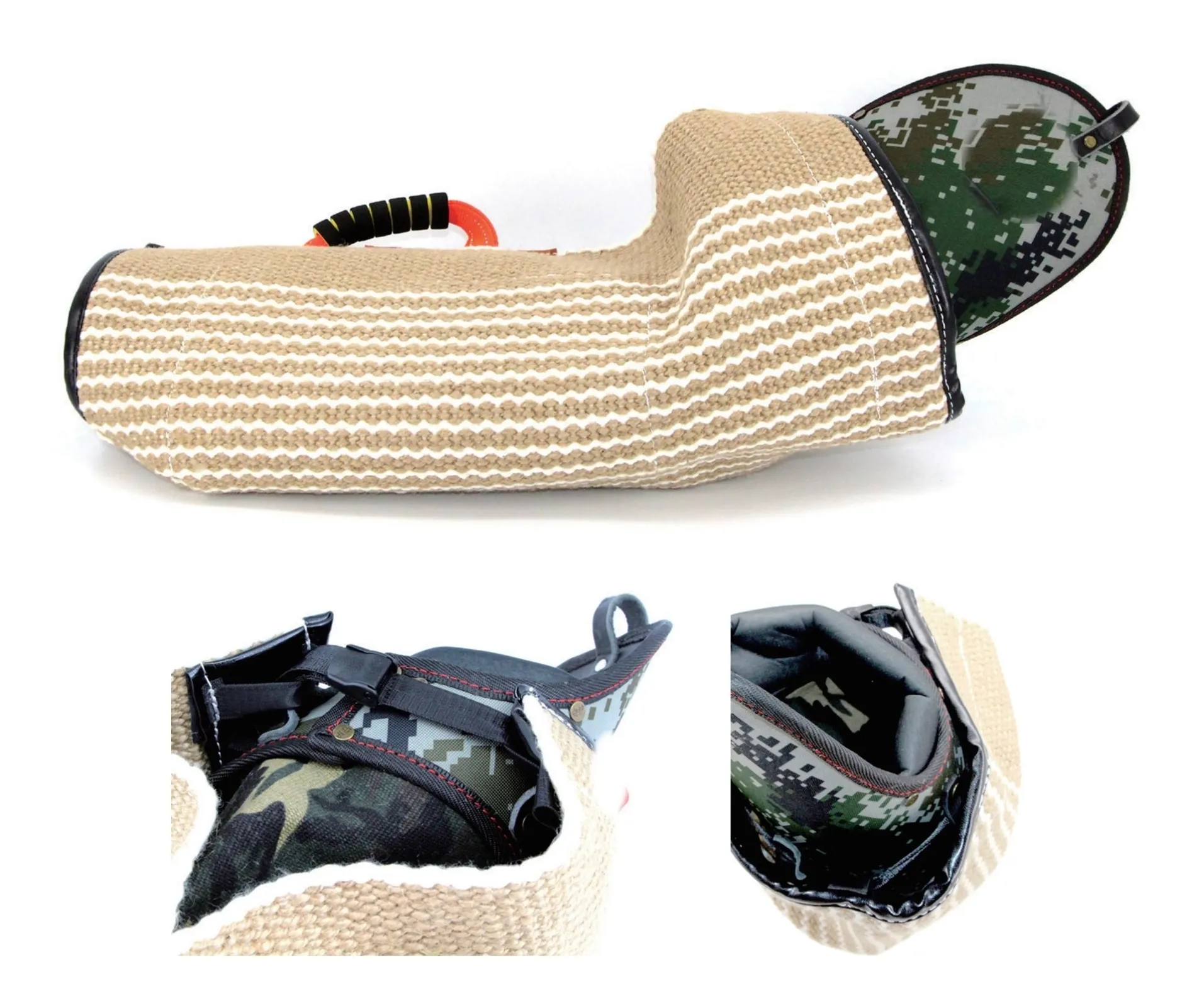
The Standard Bite Sleeve: The Visible Target
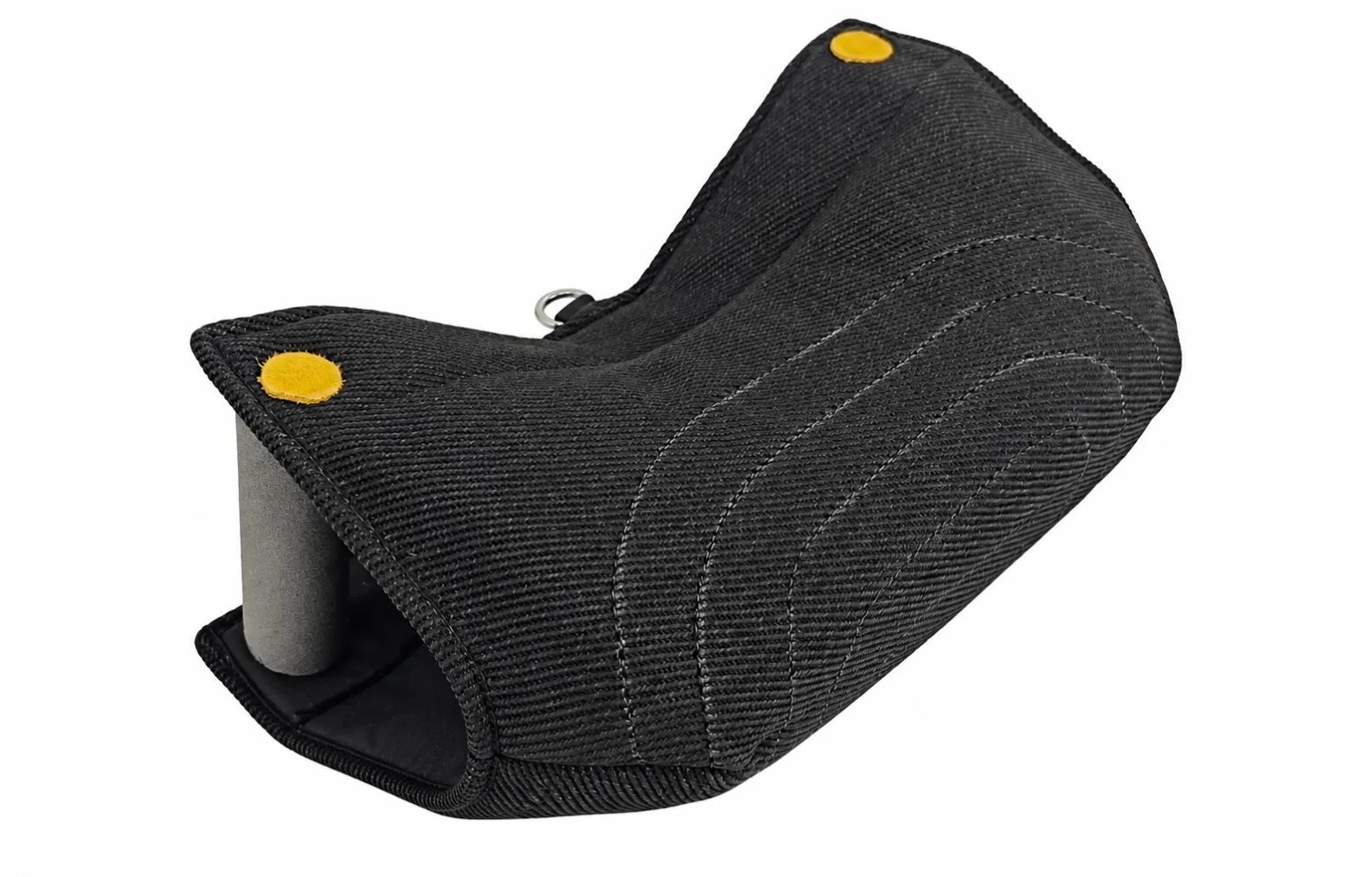
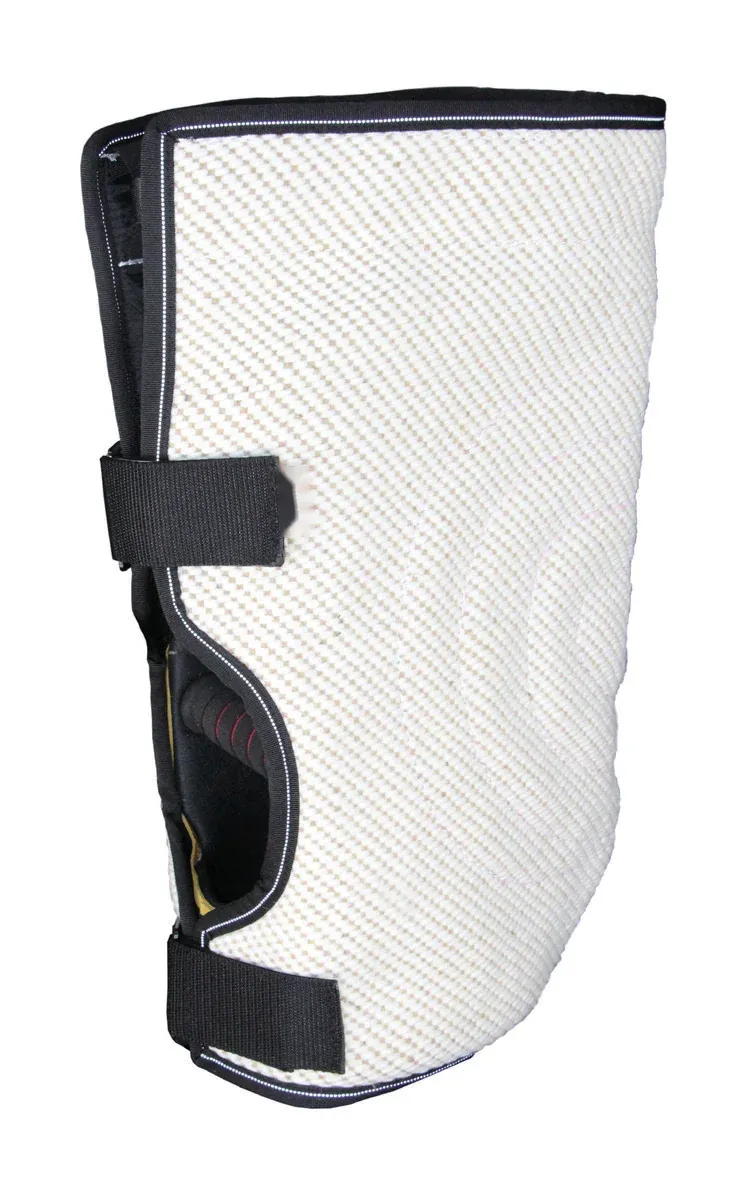
A standard bite sleeve is worn on the forearm and upper arm, over the trainer's clothing, and it is clearly visible to the dog. It is padded to absorb the bite, stiff enough to hold its shape under pressure, and shaped so the dog can take a full grip. The trainer presents the sleeve, the dog bites it, and the exercise is built around that visible target.
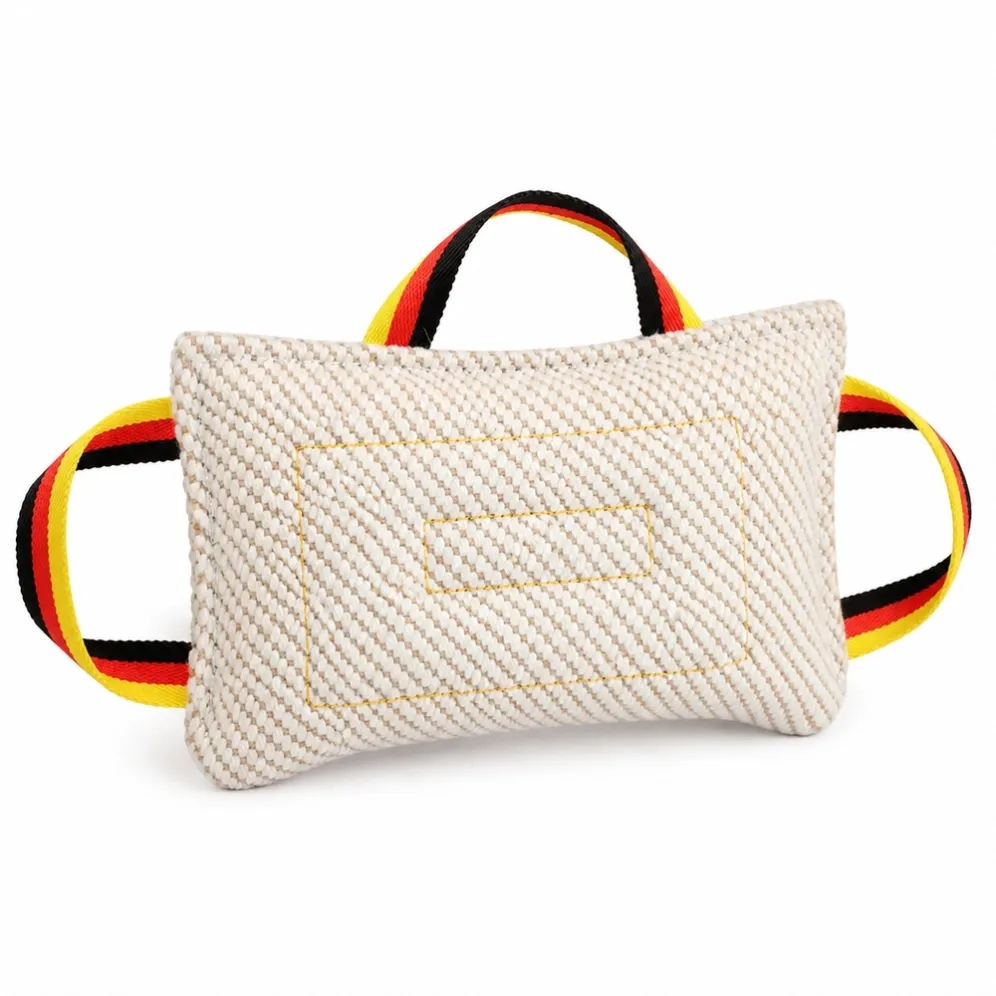
The standard sleeve is the tool for teaching and building the bite. A young dog learns on it: to target the presented arm, to take a full grip, to hold while the trainer moves, and to release on command. An experienced dog uses it for the same fundamentals, at higher speed and with more pressure. Because the target is visible and consistent, the trainer can control exactly what the dog is asked to do — the angle of the bite, the height, the movement — and can reward the right behaviour precisely. For how sleeve design affects the dog's bite and the handler's protection, see: https://www.poochin.com/posts/k9-bite-sleeve-design-handler-protection-bite-experience
The standard sleeve is also the safer tool for the trainer. Its padding and stiffness are designed for repeated full bites, and the trainer can see and control where the dog is biting. That matters when the dog is strong, fast, or still learning control.
The Hidden Sleeve: The Invisible Target
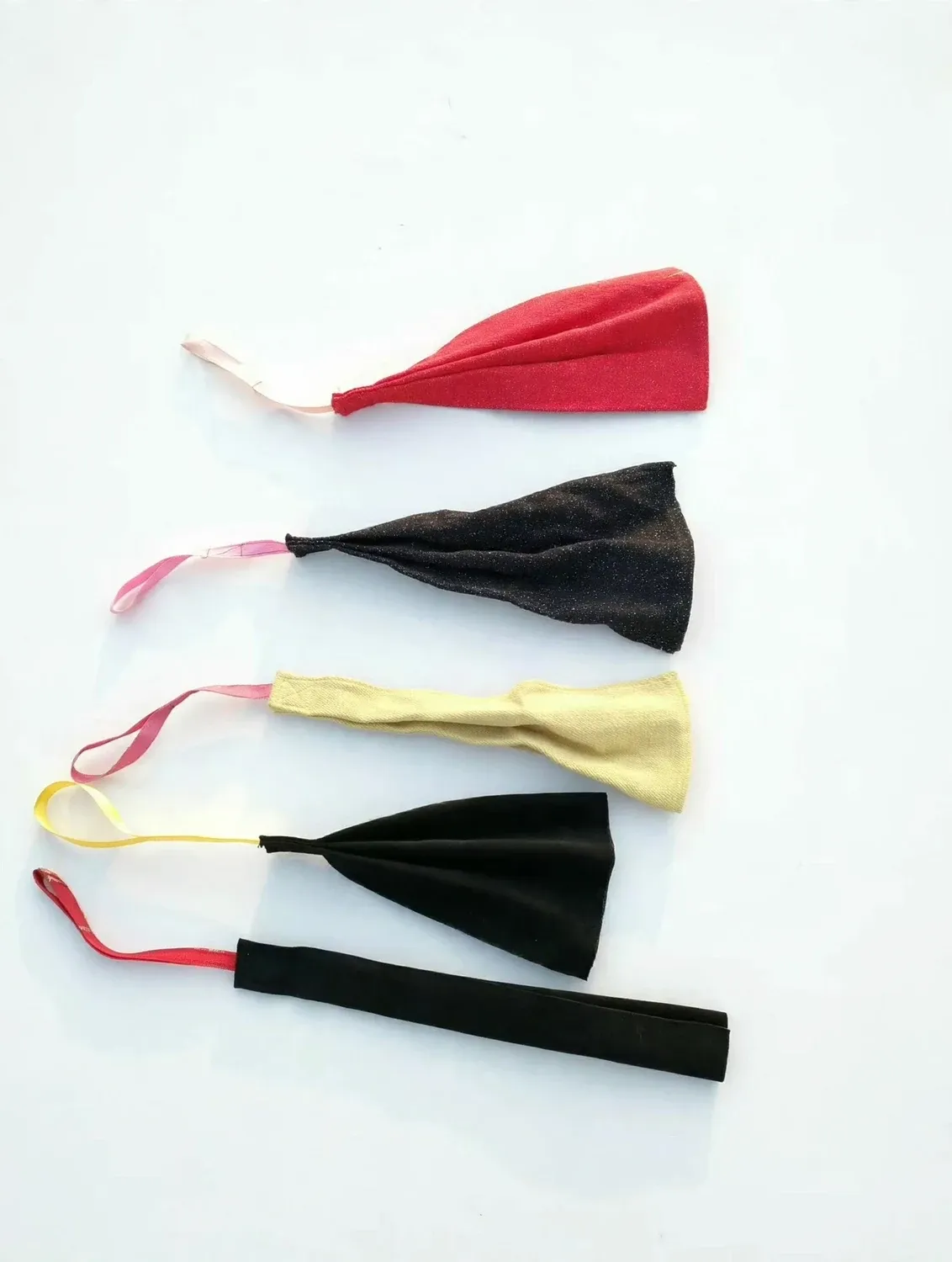
A hidden sleeve, also called a forearm pad or hidden protection sleeve, is worn under a jacket or loose clothing, so the dog cannot see it. The trainer presents an apparently unprotected arm, and the dog must commit to biting the person, not the equipment. That is the point of the exercise: in real protection work, there is no visible sleeve, and the dog must have the confidence to engage a person who offers no obvious target.
The hidden sleeve is thinner and lighter than a standard sleeve, because it must fit under clothing and allow the trainer to move naturally. It still protects the arm, but it absorbs less force than a standard sleeve, and it covers a smaller area. That is a trade-off the trainer accepts deliberately: less protection in exchange for a more realistic exercise. It should never be used as a substitute for a standard sleeve when the dog is biting hard, or when the exercise calls for repeated full bites at speed.
The hidden sleeve is an advanced tool. It belongs in the programme only when the dog already has a reliable, full grip on the standard sleeve, holds through movement, and releases on command. A dog that has not learned those things on the visible target will not learn them on the hidden one.
When to Use Each
Use the standard sleeve for teaching, for building the grip, for fixing problems, and for any exercise where the dog is biting with full power. It is the default tool, and it should be the tool used for most sessions. Use the hidden sleeve for proofing: short exercises that test whether the dog will commit without a visible target, once the fundamentals are solid.
A useful rule is that the hidden sleeve should be a small part of the programme, not a replacement for it. If most sessions use the hidden sleeve, the dog is being asked to do advanced work before the basics are secure, and the trainer is accepting more risk than the exercise justifies. The hidden sleeve proves the training; the standard sleeve builds it.
The training system matters too. Different systems — Belgian Ring, French Ring, Mondioring, KNPV, and police work — place different demands on the sleeve, and the choice of sleeve should match the system the dog is being prepared for. Tell the supplier which system the sleeve will be used for. For an introduction to one of these systems, see: https://www.poochin.com/posts/what-is-mondioring-bite-suit-guide
Moving the Dog Between the Two
The move from standard to hidden sleeve should be gradual, and it should be planned, not improvised. Start with the standard sleeve and build a reliable grip. Then introduce the hidden sleeve in easy, short exercises: the trainer presents the arm in the same way, at the same speed, with the same praise for a full grip. The only thing that changes is that the dog cannot see the protection.
If the dog hesitates, grips shallow, or will not commit, go back to the standard sleeve. Hesitation on the hidden sleeve is information, not failure: it tells the trainer that the dog's confidence is not yet where it needs to be, and that more work on the visible target is needed. Forcing the dog through hesitation on the hidden sleeve will damage confidence and can teach the dog to avoid the exercise altogether.
As the dog gains confidence, the hidden-sleeve exercises can become more realistic: different angles, more movement, a trainer who looks less like a decoy and more like an ordinary person. But the standard sleeve should stay in the programme throughout, for grip work and for any session where the dog will bite hard. The two sleeves are not stages the dog passes through and leaves behind; they are tools that are used together for as long as the dog works.
Fit, Protection, and Safety Checks
Both sleeves must fit the trainer who wears them, and fit should be checked before every session. A standard sleeve that is too loose will rotate on the arm when the dog bites and pulls; one that is too tight will restrict the elbow and tire the arm quickly. A hidden sleeve that is too loose will shift under clothing and leave part of the forearm exposed; one that is too tight will cut off circulation and limit movement. Check the fit by moving the arm through the full range the exercise will use — raised, bent, extended — and by having the dog take a grip at low intensity before the session builds.
Check the sleeve itself before every session: the stitching, the straps and fastenings, the padding, and any hard inserts. A sleeve with opened stitching, a worn strap, or compressed padding should be taken out of use until it is repaired or replaced. The sleeve is protective equipment, and protective equipment that has failed is worse than no equipment at all, because it gives the trainer false confidence.
Safety goes beyond the sleeve. The trainer should wear the rest of the protection the exercise calls for — leg protection where the dog may target the legs, and a bite suit where the exercise involves full-body contact. For how to choose leg protection, see: https://www.poochin.com/posts/how-to-choose-k9-leg-protection. And for what a bite suit is and how it differs from a sleeve, see: https://www.poochin.com/posts/what-is-a-k9-bite-suit
Comparison Table
| Standard bite sleeve | Hidden sleeve | |
|---|---|---|
| Visibility | Worn over clothing, clearly visible | Worn under a jacket, barely visible |
| Main job | Teach and build the bite | Proof the bite without a visible target |
| Protection | Full padding, built for repeated hard bites | Lighter, thinner, covers a smaller area |
| Best stage | All stages, especially teaching and fixing grips | Advanced only, once the grip is reliable |
| Share of sessions | Most sessions | A small part of the programme |
| Risk if misused | Low — it is built for the job | Higher — less protection, and a hesitant dog can lose confidence |
| What to check | Fit, stitching, straps, padding before every session | Fit under clothing, coverage of the forearm, stitching and fastenings |
Trainer Checklist: Standard or Hidden Sleeve?
- Is the dog learning or fixing a grip? Use the standard sleeve.
- Is the grip full, reliable, and released on command? Only then consider the hidden sleeve.
- Is the exercise a short proofing test, or a full training session? Short test means hidden sleeve; full session means standard sleeve.
- Does the hidden sleeve fit under the jacket without shifting, and does it cover the whole forearm?
- Are the stitching, straps, and padding intact on whichever sleeve is used?
- Is the rest of the protection in place — leg protection, and a bite suit where the exercise needs it?
- If the dog hesitates on the hidden sleeve, is the plan to go back to the standard sleeve rather than force it?
- After the session, is the sleeve dried, stored dry, and checked for wear?
FAQs
Can a beginner dog start on a hidden sleeve? No. The hidden sleeve is an advanced tool. A dog should learn on the standard sleeve first — a full grip, holding through movement, releasing on command — and only then be introduced to the hidden sleeve in short, easy exercises.
Does the hidden sleeve replace the standard sleeve? No. The standard sleeve builds the bite; the hidden sleeve proves it. Most sessions should still use the standard sleeve, and it should stay in the programme for as long as the dog works.
Is the hidden sleeve less safe for the trainer? It offers less protection than a standard sleeve, by design. That is acceptable for short proofing exercises with a dog whose grip is reliable, and not acceptable for heavy, repeated biting. The trainer should never use it as a substitute for a standard sleeve in a hard session.
My dog will not bite the hidden sleeve. What is wrong? Probably nothing is wrong — the dog is telling you its confidence is not ready. Go back to the standard sleeve, build the grip and the confidence there, and try the hidden sleeve again later in an easier exercise.
Can the same dog use both sleeves in one session? Yes, and that is often the best way to use them: build the grip on the standard sleeve, then finish with a short hidden-sleeve exercise that proves the dog will commit without a visible target.