Equipping a K9 Training School or Government Unit: Sizing, Quantities and Replacement Planning
Equip a K9 training school or government unit: sizing, quantities, shared vs personal gear, sample checks and replacement planning for bulk orders.
Equipping a K9 Training School or Government Unit: Sizing, Quantities and Replacement Planning
The Short Answer
Equipping a group is not the same as buying one set of gear. Start with the number of decoys and handlers who will use the equipment, then plan sizes, quantities and spares around them. Order a sample first, check fit and construction against your specification, and only then confirm the bulk order. Plan replacements from the start, because suits, sleeves and pillows wear at different rates, and a team without a spare is a team that stops training.
Start With the Team, Not the Product List
Begin with people, not products. A product list does not say who will wear what, how often it will be used, or what happens when one item is out of service. Before choosing models, record how many decoys will work in a normal week, how many handlers and dogs are in the programme, and how many sessions run per week.
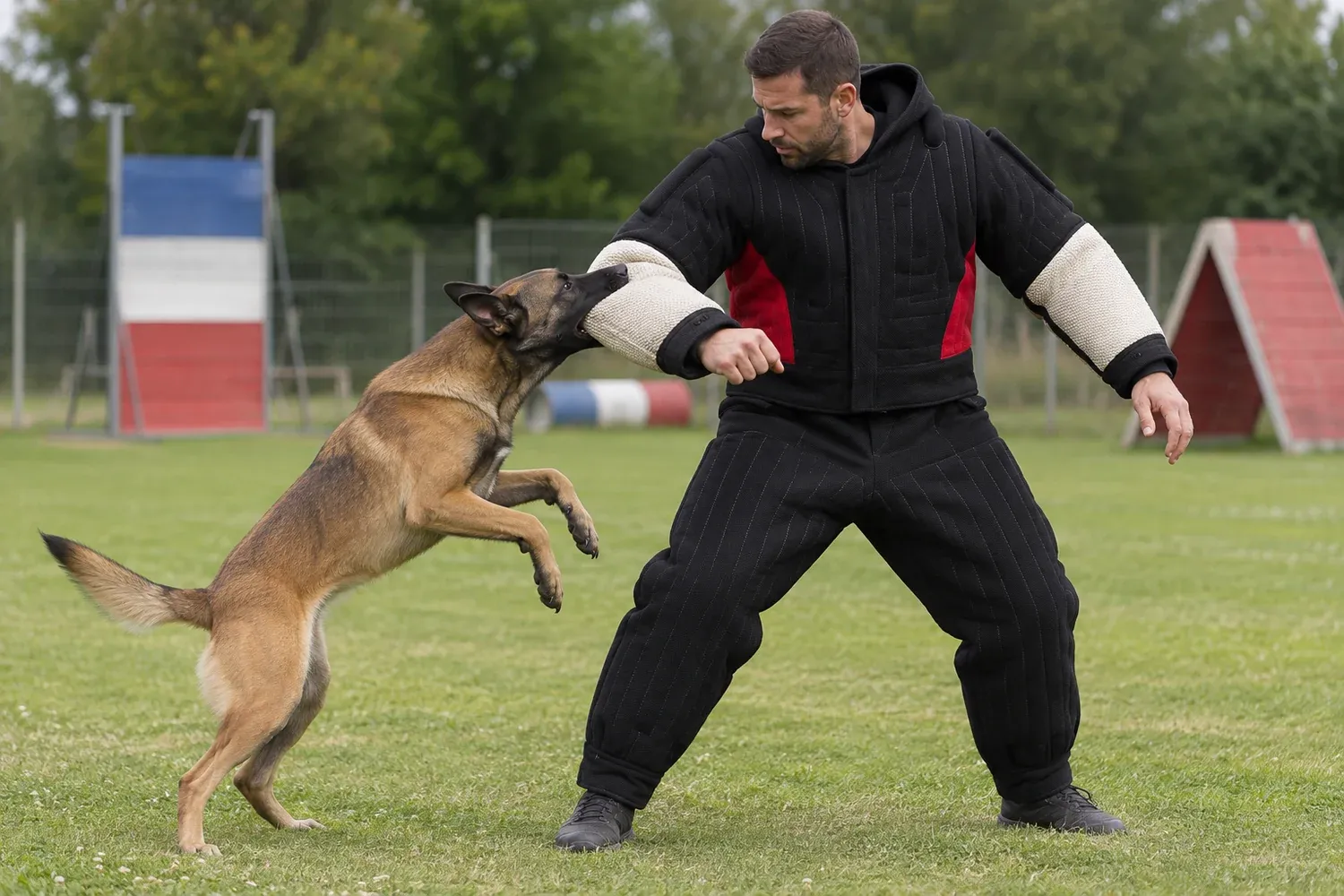
A visible sleeve, a hidden sleeve and a full bite suit serve different purposes. A programme for young dogs also needs different pillows and tugs from one for adult dogs; see K9 bite training gear by age.
How Many Pieces Does a Group Need?
There is no single correct number. Quantity depends on the number of users, frequency of use, and whether an item is worn by one person or shared.
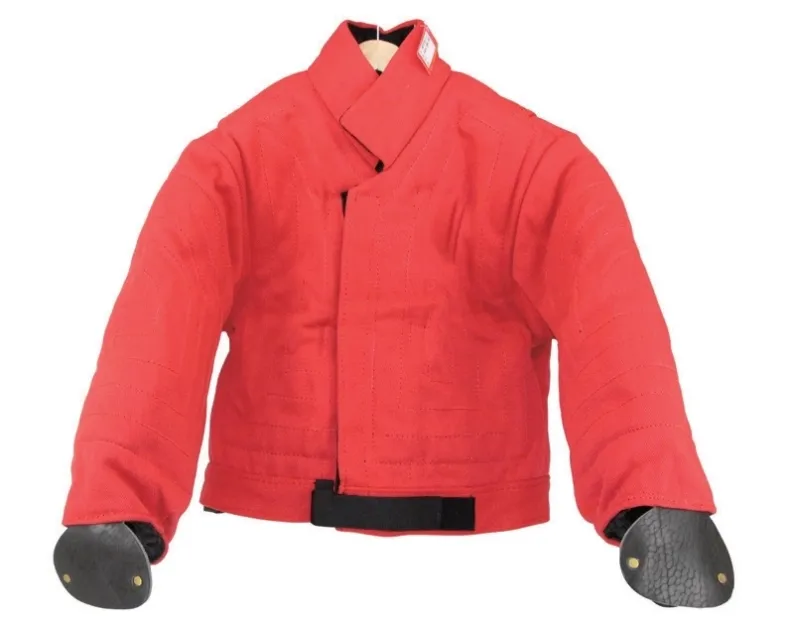
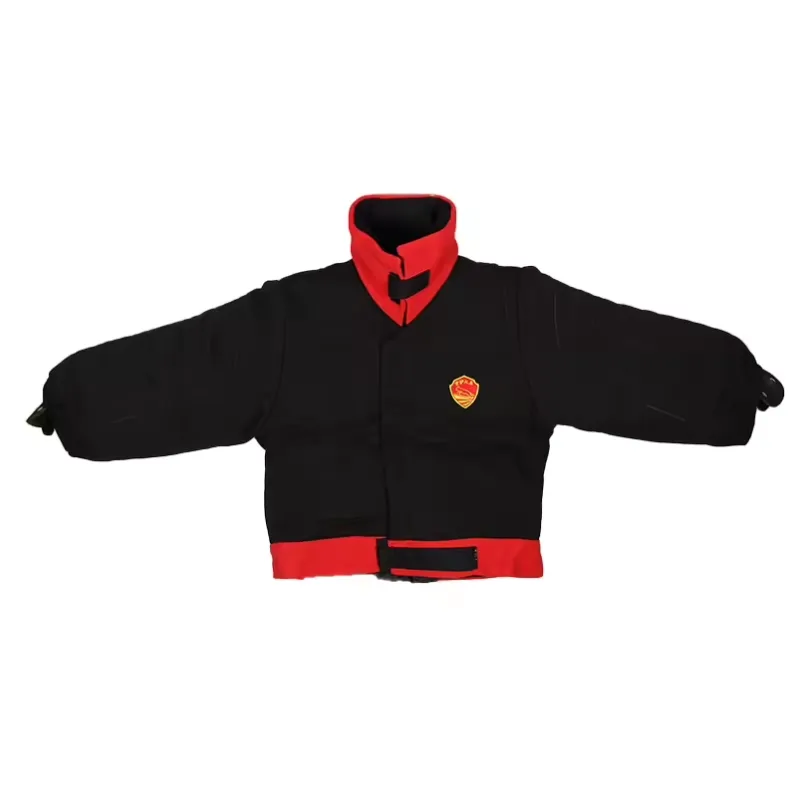
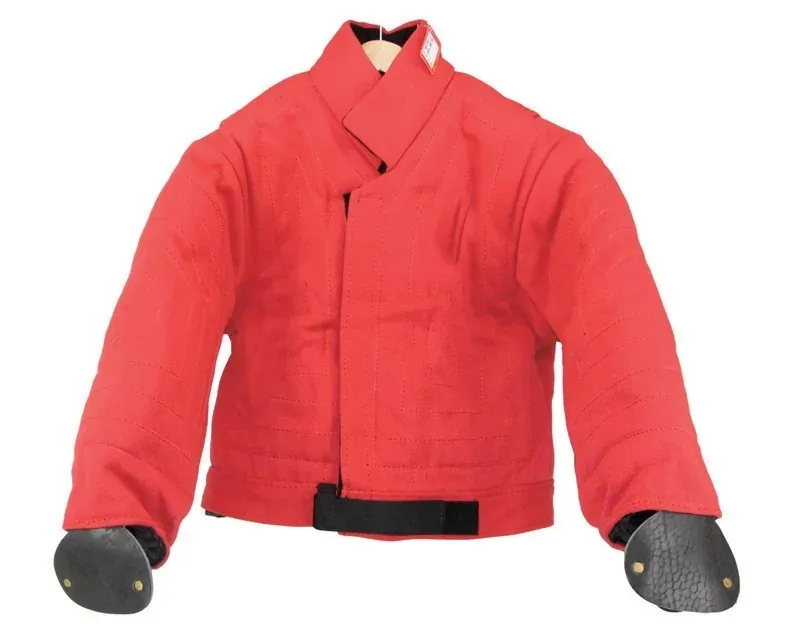
A bite suit is driven by decoys working at the same time: if two decoys work in one session, two suits are needed, plus a spare. Plan the Professional K9 Bite Suit per decoy, not per team. Plan at least one Professional K9 Training Bite Sleeve per regular user, plus a spare, and state left-hand, right-hand or both. For Professional K9 Leg Protection, quantity follows the number of decoys and the dogs' age stage. Pillows and tugs follow the number of dogs and groups; see K9 Bite Pillows & Training Wedges.
A Planning Table to Start From
Fill in your own numbers — the figures below are an example for a small school, not a recommendation for every team.
Product line | Who uses it | Quantity in example | What drives the number |
|---|---|---|---|
Professional bite suit | Decoys | 3, plus 1 spare | Decoys working at the same time |
Training bite sleeve | Decoys and handlers | 4, plus 1 spare | Regular users; left-hand, right-hand or both |
Leg protection | Decoys | 3 | Number of decoys; age stage of the dogs |
Bite pillows and wedges | Dogs in training | 6 across age stages | Number of dogs and training groups |
Training tugs | Dogs in training | 8 across sizes | Number of dogs; puppy, young dog and adult stages |
The point is not the example numbers. It is to decide for every line who uses it, how many are needed at the same time, and what happens if one is unavailable.
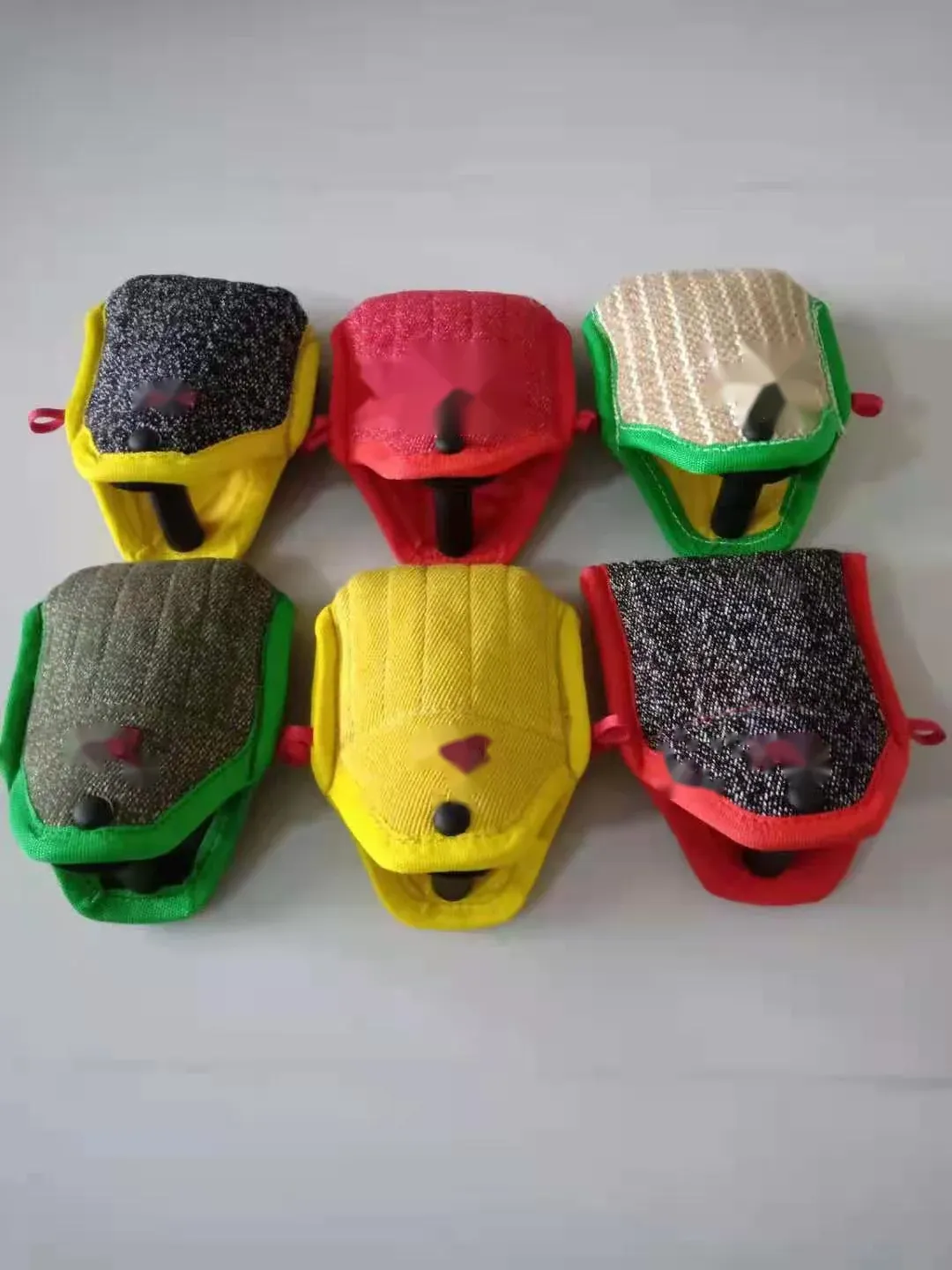
Sizing a Group: Cover the Range, Not the Average
Sizing is the part of a group order that most often causes delay. Collect the size for each named user before ordering, rather than ordering an even split and hoping it fits. List each person by role, the size for each product line, and, for sleeves, left-hand or right-hand. For leg protection, note the age stage of the dogs.
The professional bite suit is available in Small and Large, in Black, Red and Black & Red — do not assume other sizes unless confirmed. It has suspender-style trousers and cowhide leather hand guards, with thickened arms and back.
Sizes can be mixed within an order. For custom bite suits, the minimum order quantity is 20 sets, with sizes mixed — confirm whether that minimum applies to your project. For other lines, the minimum depends on the product line and on whether the design is existing or custom.
Shared Gear or Personal Gear?
Decide what is shared and what is personal. Shared gear suits items used by the dog: bite pillows and tugs can serve several dogs in a session if size and firmness suit them. Personal gear suits items worn for a full session that must fit the wearer. A bite suit shared between people of different sizes will fit neither properly. Sleeves sit in the middle: a sleeve can sometimes be shared between users of a similar size and handedness, but one shared across a whole team wears faster and fits fewer people well. Plan personal gear per regular user and shared gear per training group.
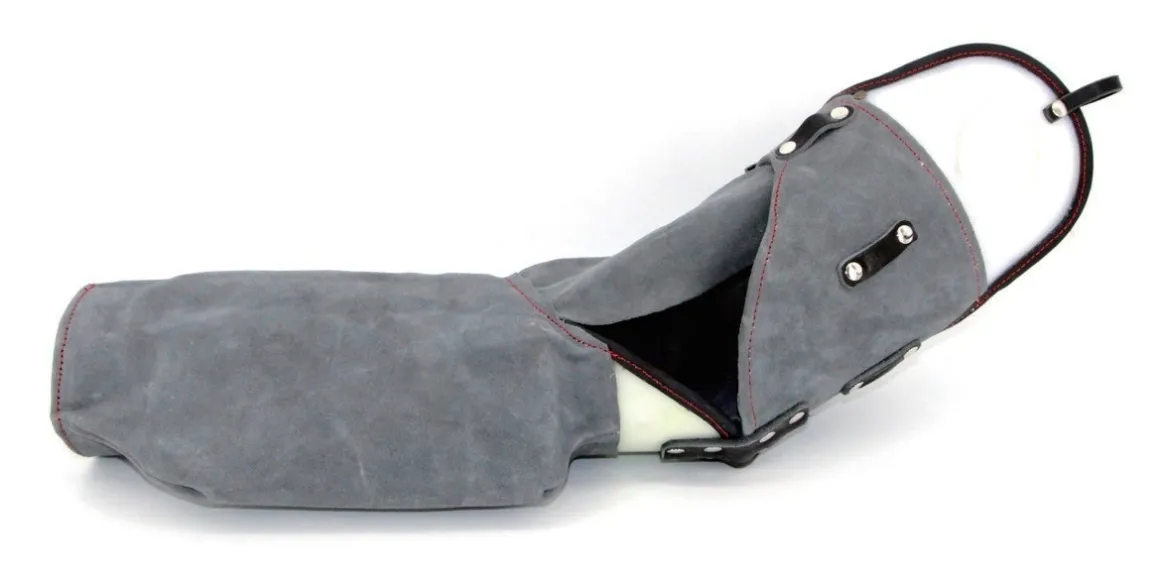
Evaluate a Sample Before the Bulk Order
Poochin supports sample development and adjustments before bulk production. In-stock samples can usually ship within a few days, while custom samples normally take 15 to 20 days. Confirm timing for your project and allow for it in the training schedule.
Check the sample: does it match the agreed dimensions, can each user operate the closures and adjustments, and are stitching, reinforcement and hardware consistent? Check materials component by component, not by a single name. Materials in the current range include jute, bite-resistant fabric, and canvas and linen-blend covers. French linen is not part of the current line. If a document specifies a named fibre or material grade, request supporting documentation.
Keep a dated specification and record which sample was approved. If changes affect construction or fit, review an updated sample. For private label projects, confirm logo placement, label content, size markings and packaging before production approval.
Plan Replacements Before Anything Wears Out
Bite gear wears, and suits, sleeves, pillows and tugs do not wear at the same rate. Plan replacements in three parts. First, spares: keep at least one spare for items that stop training when they fail — usually a bite suit and a sleeve in the most common size. Second, wear items: sleeves, pillows and tugs take direct bites in every session, so expect them to need replacement sooner than a suit. Third, size changes: teams change, a new decoy joins, or a dog moves to the next age stage. Keep the size breakdown and product list on file, so a repeat order can be placed without starting from scratch.
What to Send With Your Inquiry
Send team size; a size breakdown by person and product line, including left-hand or right-hand for sleeves; the product list, with reference photos where you have them; expected quantity per size, and whether this is a first or repeat order; any mandatory specifications; customisation such as logos, labels and packaging; and destination country and required delivery date.
For the quote itself, see how to prepare an OEM K9 equipment quote request. For the wider purchasing decision, see the Working K9 equipment procurement checklist. This article covers the step before both: how much gear a group needs, and how to size it.
Quotes are issued EXW, with freight arranged on request, so state the destination country early. Do not assume a price, delivery time or minimum order quantity from another project — confirm what applies to your case. Check your own official procurement documents, and have suitability assessed by qualified professionals for the intended use.
FAQs
How many bite suits does a training school need?
It depends on how many decoys work at the same time. Each active decoy needs a suit that fits, plus a spare in the most common size so a damaged suit does not cancel training.
Should bite suits be shared between decoys?
A bite suit is best treated as personal gear. It is worn for a full session and must fit the wearer, and a suit shared between people of different sizes will fit neither properly. Pillows and tugs are normally shared between dogs.
How do we check a sample before a bulk order?
Have the people who will actually use the gear try it. Check dimensions, closures, stitching, reinforcement and materials, and record which sample was approved. If changes affect construction or fit, review an updated sample.
Can we order different sizes in one order?
Yes, sizes can be mixed. For custom bite suits, the minimum order quantity is 20 sets, with sizes mixed. For other lines, the minimum depends on the product line and on whether the design is existing or custom — confirm what applies to your project.
Tell Poochin What Your Team Needs
Equipping a group starts with the team: how many decoys and handlers, what sizes they need, and how often the gear will be used. Send Poochin your team size, size breakdown, product list, reference photos or specifications, expected quantity and required delivery date to sales@poochin.com, or via the contact page. Include your destination country so the quotation and freight can be reviewed together.