K9 Training Vests and Jackets: What Handlers and Decoys Should Look For
A training vest or jacket is working equipment, not a uniform. What to look for in pockets, movement, weather protection and fit — and how Poochin's training apparel is built for handlers and decoys.
Introduction: The Handler's Clothing Is Equipment Too
Most of the attention in bite work goes to the dog's equipment — the sleeve, the suit, the tug, the pillow. The handler's clothing gets far less thought, and it shows on the training ground: a trainer juggling a tug, a ball, a lead and treats with nowhere to put them; a decoy whose jacket rides up and restricts the arm; a handler soaked through halfway into a wet session.
Training apparel is working equipment, not a uniform. It has to let the handler move freely, carry the tools of the session, and keep the handler visible and dry enough to keep working. A vest that fails at any of these jobs changes the session: a trainer who cannot reach a reward quickly cannot reward at the right moment.
This guide explains what to look for, how Poochin's training apparel range is built for handlers, decoys, and working-dog units, and how to choose the right pieces for your role and climate.
What Training Apparel Has to Do
Three demands decide whether a training vest or jacket is fit for the work. The first is freedom of movement. A handler crouches, reaches, throws and runs, and a decoy moves and presents. Clothing that binds at the shoulders, rides up at the waist, or pulls across the back will be fought against all session. Look for a cut that allows a full overhead reach, and for stretch or articulated panels where the body bends most — at the knees in trousers, and across the shoulders in a jacket.
The second demand is storage. A session runs on small tools: balls, tugs, treats, a lead, a whistle, a clicker, a phone. Each one needs a pocket that holds it securely and releases it quickly, because a reward that takes ten seconds to find is a reward given too late. Count the pockets and check where they sit: front pockets should be reachable with either hand.
The third demand is weather and durability. Training happens outdoors, in rain, wind, and cold, and on ground that tears at fabric. A jacket should resist wind and water, and resist abrasion where it rubs against the ground or the dog's equipment. Trousers should dry quickly after a wet session. The fabric should also be easy to clean: mud, dog hair, and slobber are part of the job.
Training Vests: Carrying the Session
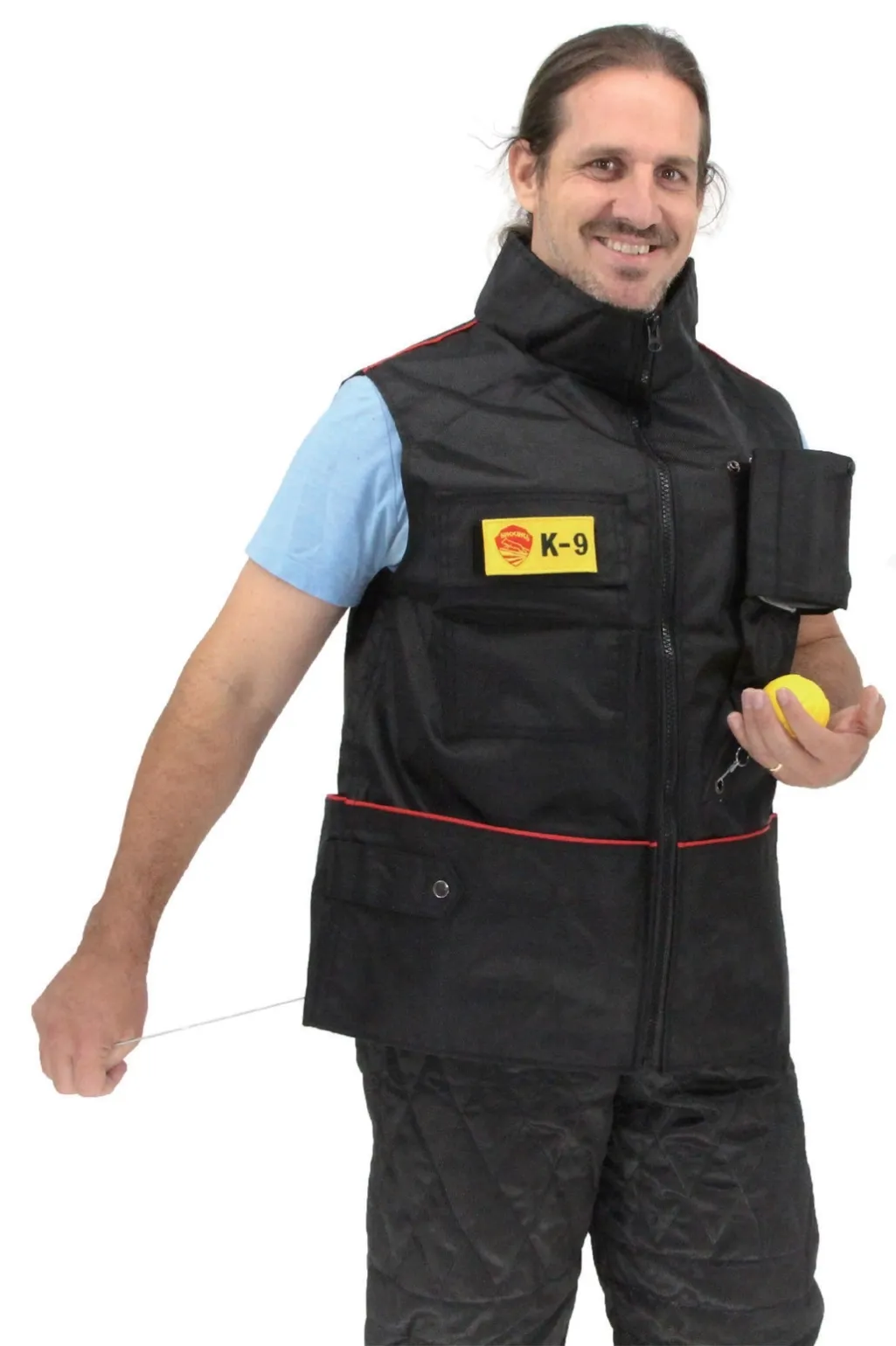
A training vest is the handler's workbench: it carries the session's tools and keeps the hands free. Poochin supplies two vests, built for different jobs. The Elite Training Vest is made from soft, easy-clean nylon, with multiple front and rear pockets, in sizes M to XXXL. It is the general-purpose vest for a normal training day, when the job is to carry treats, a ball, a lead, and a tug. Easy-clean nylon matters: a vest that wipes clean after a muddy session will be used again the next day.
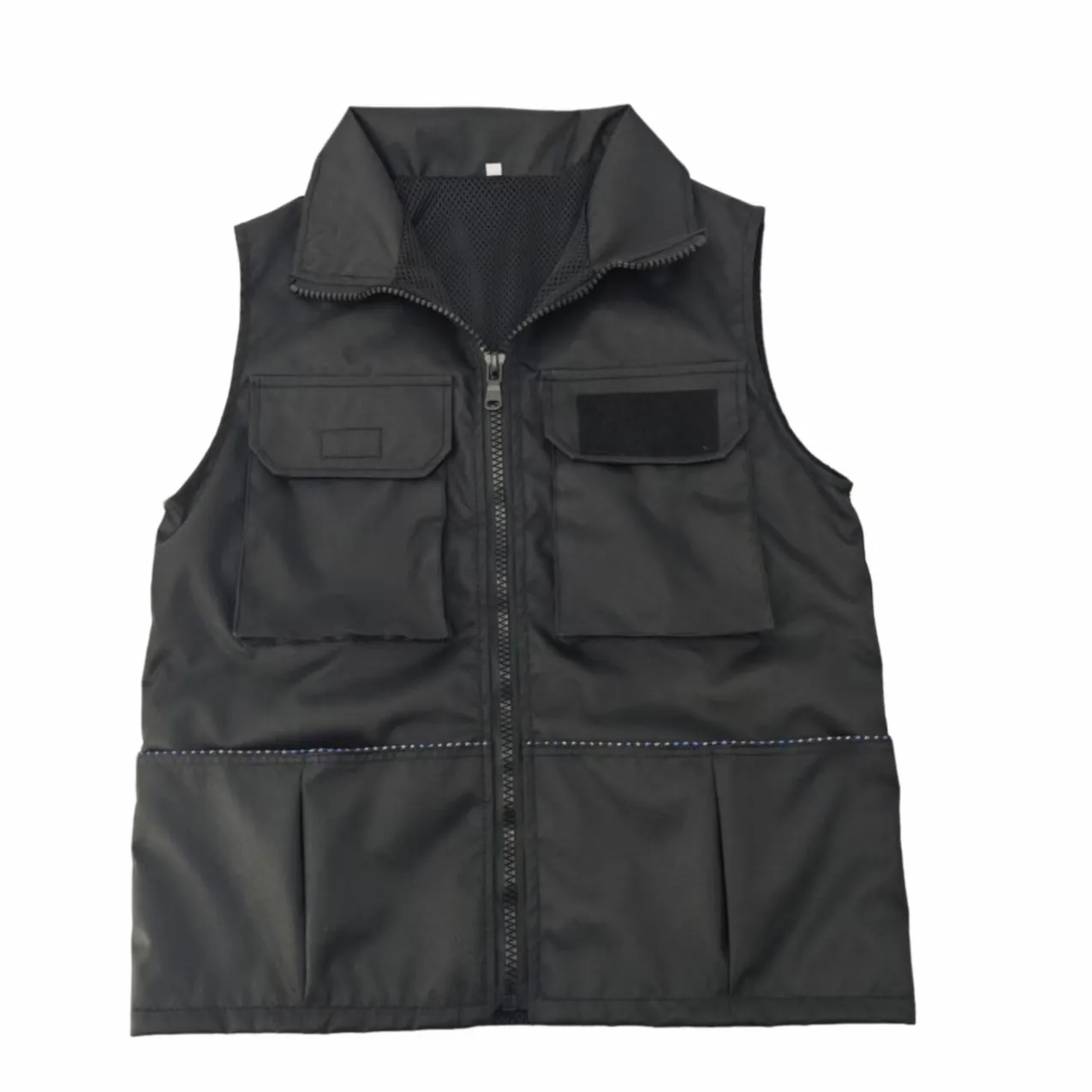
The Drop-ball Training Vest is a specialist tool. It is made from ripstop fabric and has a dedicated tube to place a training ball during heeling work; the handler releases the ball with the right hand to attract the dog. That detail shows what a training vest should be: a tool shaped around a specific exercise, not a generic garment with pockets. If your training includes heeling work with a ball reward, a vest with a ball tube keeps the reward exactly where the hand expects it. It is supplied in sizes M to XXXL.
Jackets and Trousers: The Tactical Training Suit
For handlers and decoys who train outdoors in all weather, a vest on its own is not enough — the jacket and trousers carry the weather protection. Poochin's 2022 Shadow Tactical Training Suit is built for that job. The jacket is oil-resistant, wind-resistant, abrasion-resistant, and water-repellent, with reflective details for night work and name-patch areas on the chest, the backs of the hands, and the back. Each detail answers one of these demands: the fabric resists weather and wear, the reflective details keep the handler visible in low light, and the name patches identify the wearer.
The trousers are made from a quick-dry, water-resistant, lightweight four-way-stretch outdoor fabric, with articulated knees and abrasion-resistant panels. The stretch and articulated knees answer the movement demand: trousers should move with the legs, not against them. The quick-dry fabric means wet trousers are ready for the next session. The abrasion-resistant panels protect the points that wear first — the knees and the seat.
The suit has eight large pockets for training aids, and is supplied in sizes M to XXXXL — the widest size range in Poochin's training apparel range. For the leg protection that pairs with the trousers in bite work, see: https://www.poochin.com/posts/how-to-choose-k9-leg-protection
The Smaller Kit: Aprons and Bags
A vest or a suit carries the tools of the session, but two smaller items carry the rest. The Professional Training Apron, supplied in sizes M to XL, protects the handler's clothing during close, messy work — reward work, puppy sessions, and handling — and keeps treats and small tools in reach without the weight of a full vest.
The treat bag and the multifunctional bag carry what the pockets cannot. The Professional Treat Bag measures 18.2 cm wide by 20 cm high by 13.5 cm in diameter and holds a session's worth of treats within easy reach. The Multifunctional Bag measures 19 cm high by 33 cm wide by 10 cm deep and carries the larger items — leads, tugs, a ball, and a whistle.
How to Choose: Role, Climate, and Fit
Choose training apparel by the role first. A handler who runs sessions needs storage and movement above all: a vest, or a suit with its eight pockets, and a treat bag. A decoy needs movement and protection: trousers with articulated knees and abrasion-resistant panels, and a jacket that does not restrict the arm. A trainer who teaches from the side of the field needs weather protection and visibility for long hours outdoors, and name patches that identify them to the class.
Climate comes next. In wet or cold conditions, the jacket and trousers carry the session. In warm conditions, the vest and the apron are the lighter choice, carrying the tools without the weight of a full suit. A club that trains through the year should plan for both rather than asking one garment to do every job.
Fit is the check that decides whether any of it works. A vest that is too tight restricts the reach; one that is too loose lets its pockets swing and its contents spill. A jacket that is too short rides up when the handler crouches. Try the garment on with the tools inside it: reach overhead, crouch, turn, run a few steps. If the pockets shift, the fabric binds, or the jacket rides up, the size is wrong. Check the size range before ordering for a team — vests M to XXXL, apron M to XL, tactical suit M to XXXXL — and measure each wearer.
Ordering for a Club, a School, or a Unit
Training apparel is often bought for more than one person, and that changes how the order should be placed. Poochin supplies wholesale, OEM, and private-label options for its training apparel range. A club or a school ordering for a team should send the target items, the sizes for each wearer, the expected quantity, and any logo or packaging requirements — the name patches on the tactical suit, for example, are an obvious place for a club or unit logo. For how to prepare an equipment quote request, see: https://www.poochin.com/posts/how-to-prepare-an-oem-k9-equipment-quote-request
The apparel can be ordered alongside the bite equipment: a school equipping itself will usually need vests and suits for its handlers and decoys at the same time as sleeves, suits, and tugs for the dogs. Start from the roles — who handles, who decoys, who teaches — and order the apparel for each role.
The Right Kit Lets the Handler Disappear
Good training apparel does not draw attention to itself. It carries the tools, lets the handler move, keeps the handler dry and visible, and then gets out of the way, so the handler's attention stays on the dog. The wrong kit distracts, restricts, and slows the reward. Choose by the role, the climate, and the fit.
If you are equipping handlers, decoys, or a whole training team, contact Poochin with your target items, sizes, and quantities, and ask about wholesale, OEM, and private-label options. See the full range on the Working K9 Training Apparel & Gear page.
Comparison Table
| Piece | Built for | Key features (from Poochin's range) | Sizes |
|---|---|---|---|
| Elite Training Vest | General daily handling | Soft, easy-clean nylon; multiple front and rear pockets | M, L, XL, XXL, XXXL |
| Drop-ball Training Vest | Heeling work with a ball reward | Ripstop fabric; dedicated ball tube, released with the right hand | M, L, XL, XXL, XXXL |
| 2022 Shadow Tactical Training Suit — jacket | All-weather outdoor training | Oil-resistant, wind-resistant, abrasion-resistant, water-repellent; reflective details; name-patch areas on chest, backs of hands and back | M–XXXXL |
| 2022 Shadow Tactical Training Suit — trousers | All-weather outdoor training | Quick-dry, water-resistant, lightweight four-way-stretch fabric; articulated knees; abrasion-resistant panels | M–XXXXL |
| Professional Training Apron | Messy reward and puppy work | Protects clothing; keeps treats and small tools in reach | M, L, XL |
| Professional Treat Bag | Carrying treats | 18.2 cm wide x 20 cm high x 13.5 cm diameter | One size |
| Multifunctional Bag | Carrying leads, tugs, balls and tools | 19 cm high x 33 cm wide x 10 cm deep | One size |
Buyer Checklist: Training Vest or Jacket?
- Who wears it — handler, decoy, or trainer — and what does that role need most: storage, movement, or weather protection?
- Does it allow a full overhead reach and a deep crouch without binding or riding up?
- Are there enough pockets, reachable with either hand, for the session's tools — ball, tug, treats, lead, whistle?
- Does the fabric resist wind, water, and abrasion, and does it dry quickly after a wet session?
- Is it easy to clean after mud, dog hair, and slobber?
- Are there reflective details for low-light work, and name-patch areas for identification?
- Does the size range cover every wearer on the team — check before ordering, and measure each person?
- For a club or unit order, are the target items, sizes, quantities, and any logo or packaging requirements ready to send with the quote request?
FAQs
Does Poochin make training clothing for handlers and decoys?
Yes. Poochin's training apparel range includes training vests, a tactical training suit with jacket and trousers, a training apron, and treat and multifunctional bags. See the full range here: https://www.poochin.com/products/working-k9-training-apparel
Which vest should I choose — Elite or Drop-ball?
The Elite Training Vest is the general-purpose vest for daily handling, with multiple front and rear pockets. The Drop-ball Training Vest is the specialist choice for heeling work with a ball reward, with a dedicated ball tube released with the right hand.
What sizes are available?
The vests are supplied in M to XXXL, the training apron in M to XL, and the 2022 Shadow Tactical Training Suit in M to XXXXL.
Can a club order vests and jackets with its own logo?
Poochin offers wholesale, OEM, and private-label options. Send the target items, sizes, expected quantity, and any logo or packaging requirements with the quote request. For how to prepare a quote request, see: https://www.poochin.com/posts/how-to-prepare-an-oem-k9-equipment-quote-request
Does the tactical suit replace a bite suit?
No. The tactical training suit is apparel for the handler or decoy — it is not bite protection. Bite work still needs a bite suit or a bite sleeve. For what a bite suit is, see: https://www.poochin.com/posts/what-is-a-k9-bite-suit