Bite Suit vs Bite Sleeve for K9 Training: Which Do You Need?
Compare K9 bite suits and bite sleeves: what each protects, who uses them, and how to decide which your working-dog training needs.
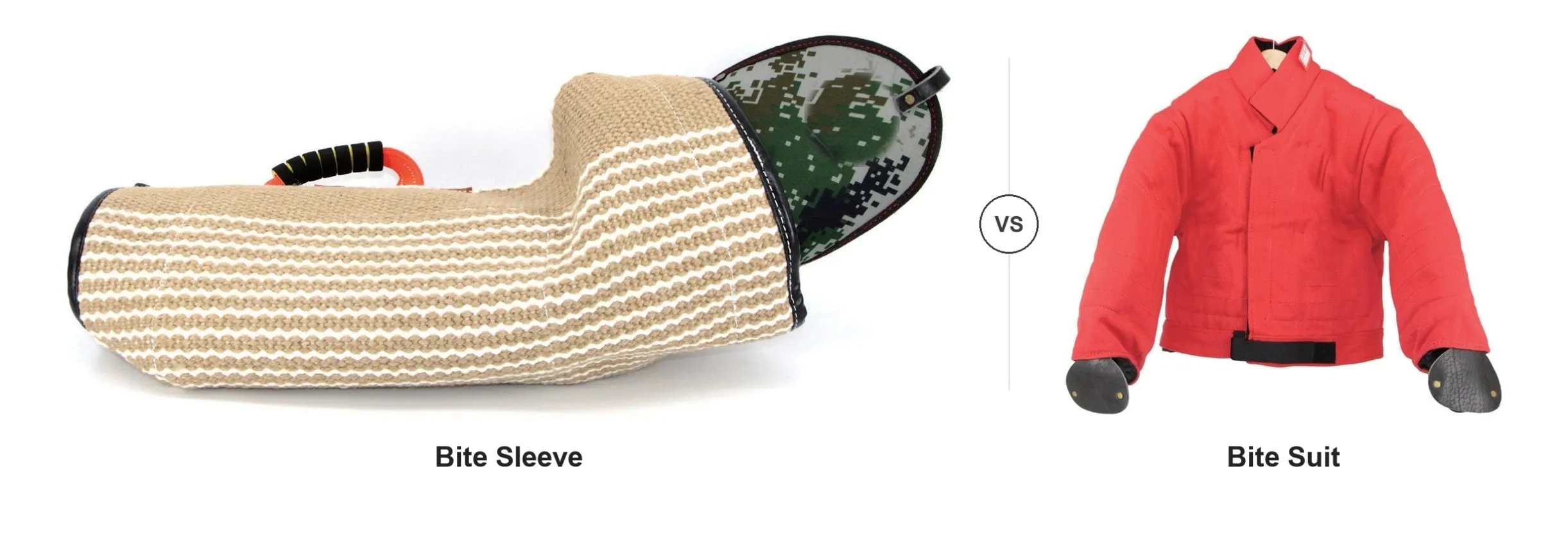
When choosing equipment for working K9 training, one of the most common questions is: Should I use a bite sleeve or a full bite suit?
The answer is not simply that one is better than the other. Bite sleeves and bite suits are designed for different training situations, and the right choice depends on the dog's training stage, the type of exercise, the protection required and how the handler or decoy needs to move.
A bite sleeve provides a focused target around the arm, while a bite suit offers much broader body coverage. In many working K9 programs, both can have a place in the training process.
This guide explains the practical differences between the two, when each type of equipment may be more suitable, and what buyers should consider before choosing or customizing a product.
The Short Answer: Bite Suit or Bite Sleeve?
If the training mainly focuses on a controlled arm target, a bite sleeve is often the more practical choice. It provides protection around the arm while giving the dog a clear target for bite and grip work.
If the training requires broader body protection or involves movement and different target areas, a bite suit may be more appropriate. A full suit can provide protection over areas such as the arms, torso and legs, depending on its design and construction.
For training programs that cover different exercises, there is no need to treat these products as alternatives. A bite sleeve and a bite suit can serve different purposes and may both be useful as the dog's training develops.
Bite Suit vs Bite Sleeve: What's the Difference?
The easiest way to understand the difference is to look at the area of protection and the type of training the equipment is intended to support.
| Feature | Bite Sleeve | Bite Suit |
|---|---|---|
| Protection | Primarily focused on one arm | Broader body coverage |
| Main use | Focused bite and grip work | Full-body or broader protection training |
| Target area | Primarily the arm | May include arms, torso and legs depending on design |
| Movement | Focused around the protected arm | Designed for training with broader body movement |
| Customization | Material, bite surface, handles, fit and reinforcement | Material, sizing, protection zones, sleeve structure and reinforcement |
The important point is that the choice should be based on the intended training application rather than simply selecting the product that looks stronger or more protective.
When Is a Bite Sleeve Used?
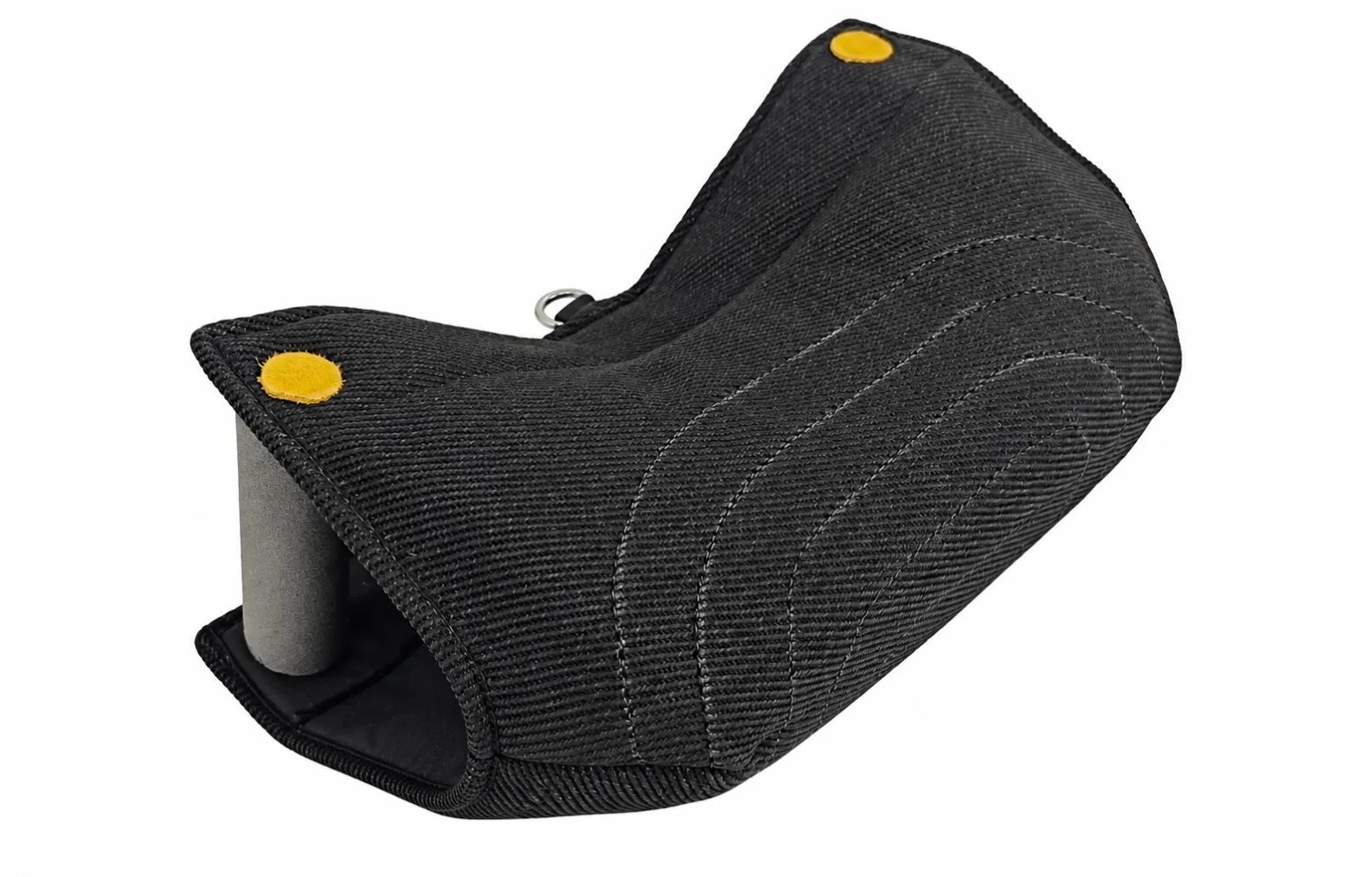
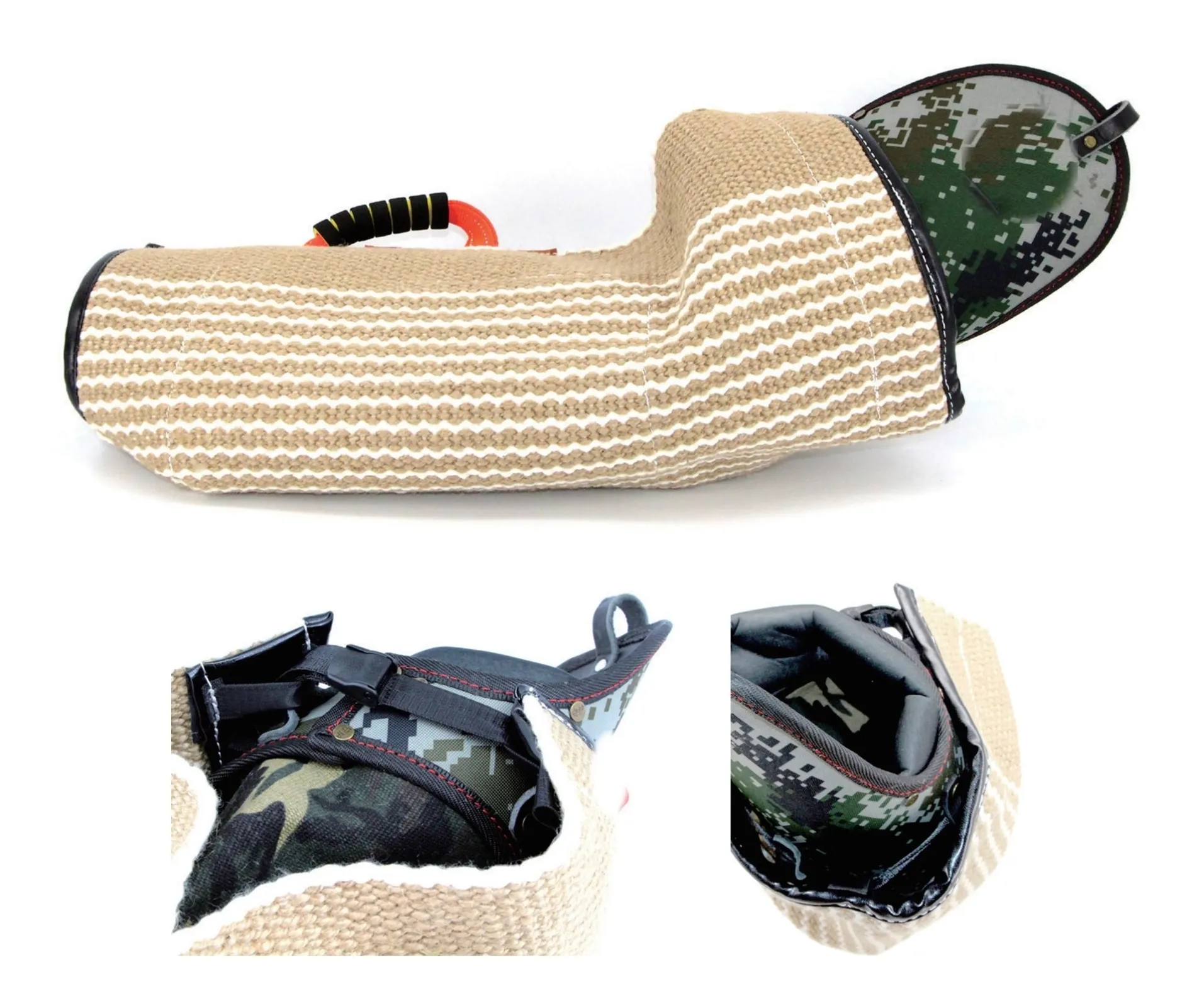
A bite sleeve gives the dog a relatively focused target while protecting the handler's arm. This makes it useful for training situations where the exercise is centered around controlled bite work, targeting and grip development.
Compared with a full bite suit, a sleeve is also a more focused piece of equipment. The trainer can work on a specific target without introducing protection over the entire body.
The construction of the sleeve matters as well. The bite surface, internal structure, handles, seams and reinforcement all affect how the sleeve feels and performs during training.
When a Bite Sleeve May Be a Better Choice
- The training focuses mainly on arm targeting.
- The trainer needs a clear and controlled bite target.
- The exercise focuses on grip development or controlled engagement.
- Full-body protection is not required for the training session.
- The training program uses different sleeve constructions for different stages of development.
For buyers, this means that choosing a bite sleeve should not be based on material name alone. The complete construction needs to match the intended training application.
When Is a Bite Suit Used?
A bite suit is designed for situations where the handler or decoy needs protection over a much larger part of the body.
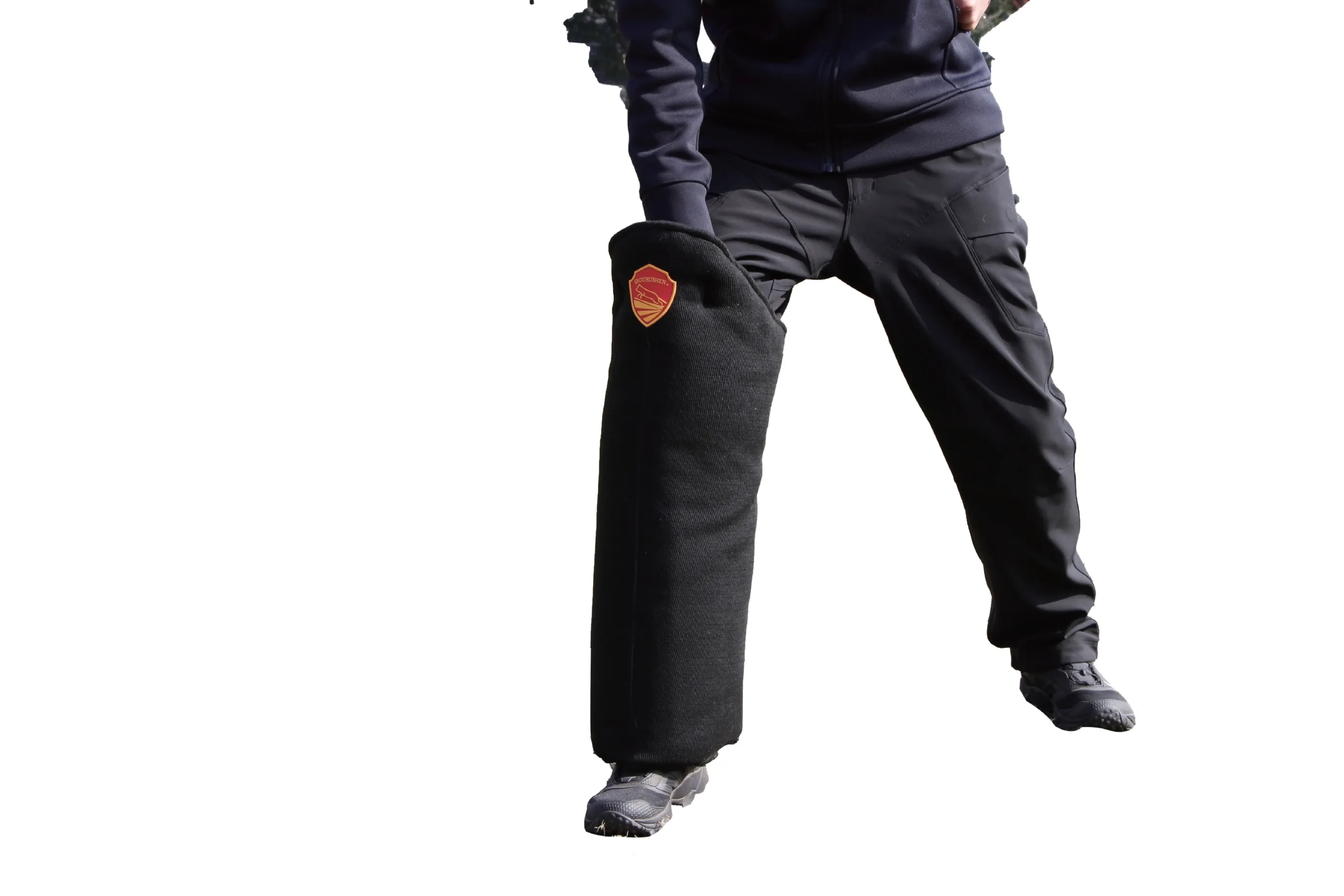
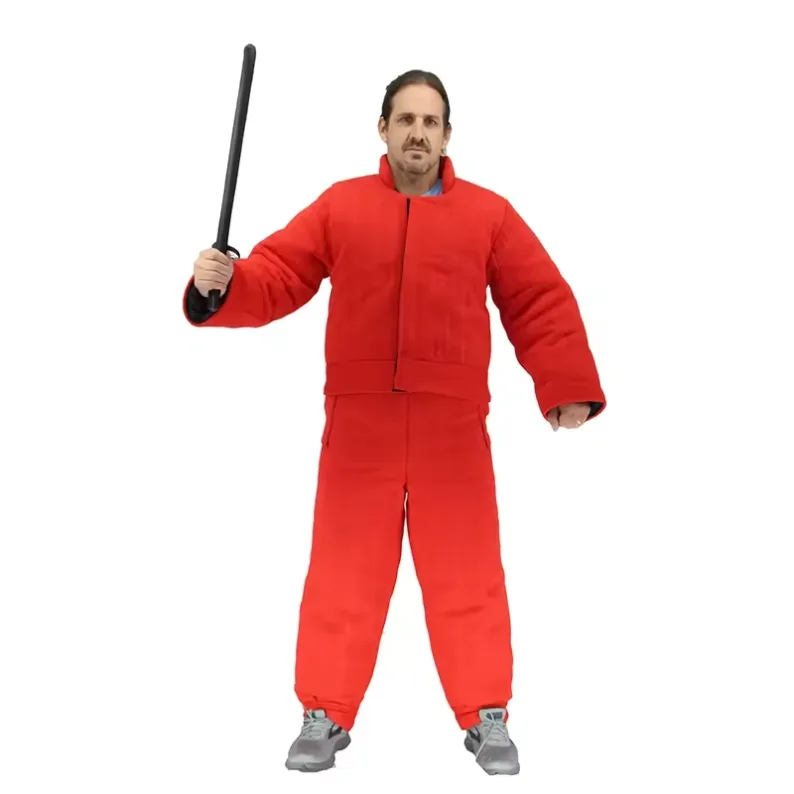
Depending on the design, a full bite suit can provide protection around the arms, torso and legs. This makes it suitable for training where the dog may work on different areas rather than being limited to one arm target.
Another important consideration is movement. A bite suit needs to provide the required protection while still allowing the decoy to move during training. This makes fit, construction and the distribution of protective material particularly important.
When a Bite Suit May Be a Better Choice
- The training requires broader body protection.
- The exercise involves different potential target areas.
- The decoy needs to move while wearing protective equipment.
- The training involves more advanced or scenario-based exercises.
- The customer needs specific areas of the suit to have additional reinforcement.
A bite suit therefore should not simply be evaluated by its total weight or thickness. The way protection is distributed throughout the suit can be just as important.
Consider the Dog's Training Stage
The dog's training stage is another factor when choosing between a bite sleeve and a bite suit.
A young or developing dog may work with a more focused target while learning basic engagement, grip and targeting skills. As training progresses, the equipment requirements may change, particularly when exercises involve more movement or different target areas.
This is why professional training programs do not necessarily treat a bite sleeve and a bite suit as competing products. They can be used for different purposes at different stages of training.
The right question is therefore not simply "Which product is better?" but rather "Which product is appropriate for this training session and this stage of the dog's development?"
Materials and Construction Matter Too
When comparing bite suits and bite sleeves, it is easy to focus only on the name of the material or how heavy the product feels. In practice, the finished construction is more complicated.
Depending on the product, working K9 equipment may use materials such as jute, linen-based fabrics, leather, canvas or other bite-resistant materials. Different materials can be used for different purposes, and the same material can perform differently depending on how it is constructed.
When evaluating a bite sleeve or bite suit, it is useful to look at the complete construction:
- Bite surface: the material and construction the dog actually engages with.
- Internal structure: padding and supporting layers used inside the product.
- Reinforcement: areas that may receive additional protection according to the intended use.
- Seams: construction quality in areas exposed to repeated stress.
- Handles and grips: particularly important for bite sleeves and training equipment.
- Fit and movement: especially important for full-body bite suits.
A heavier product is not automatically a better product. The goal should be to match the construction and protection level to the actual training requirements.
Why Custom Construction Can Matter
Not every trainer or working K9 program uses protective equipment in exactly the same way. This is why some buyers need more than a standard product.
For example, a customer may have specific requirements for the sleeve length, shoulder width, overall suit weight, bite surface, reinforcement or other construction details. These requirements can be related to the way the equipment will actually be used during training.
For OEM projects, it is useful to define these requirements before sampling. A reference photo, existing sample, measurements or detailed product specification can help communicate what needs to be changed.
The goal is not simply to add more material. It is to understand what the additional material or structural change is intended to achieve and then adjust the product accordingly.
Do You Need Both a Bite Sleeve and a Bite Suit?
Not every training program needs both products from the beginning.
However, programs that cover different exercises may find that a bite sleeve and a bite suit serve different purposes. A sleeve can provide a focused arm target for specific exercises, while a bite suit provides broader protection when the training requires the dog to work on different areas of the decoy.
For buyers building a working K9 equipment range, it can therefore make sense to think about the two products as complementary rather than competing products.
The choice should ultimately be based on the training program, the dogs being trained and the way the equipment will be used.
What Should You Tell a Supplier Before Ordering?
If you are buying bite suits or bite sleeves for a training club, distributor or private-label brand, providing the right information at the beginning can make the quotation and sampling process much more efficient.
Useful information includes:
- The type of training the equipment will be used for.
- The age and training stage of the dogs.
- Whether you need a bite sleeve, bite suit or both.
- The areas where additional protection may be required.
- Preferred materials or an existing product reference.
- Required size range and handler measurements if customization is needed.
- Expected quantity.
- Logo, label or packaging requirements for private-label projects.
If you already have a reference product, photo or sample, sharing it can also make it much easier to discuss the required construction.
How We Approach Working K9 Gear Projects
At Poochin, we normally start by understanding how the equipment will be used rather than looking only at the product name.
For existing designs, customers can start by reviewing our standard products and requesting a quotation or sample. This can be a practical way to evaluate the equipment before moving to a larger order.
For OEM and private-label projects, customers can provide reference photos, measurements, specifications or an existing sample. We can then review the requested materials, construction, sizing and other requirements before discussing sampling.
This approach is particularly useful when a customer knows what they want the equipment to achieve but needs to discuss how those requirements can be translated into a workable product.
So, Which One Is Right for Your K9 Training?
If your training focuses mainly on controlled arm targeting, grip development and bite work, a bite sleeve may be the more practical starting point.
If you need broader body protection, more movement or training involving different target areas, a bite suit may be more appropriate.
There is no single product that is right for every working K9 program. The best choice depends on the dog's training stage, the training method, the required protection and the way the equipment will be used.
If you are still unsure, send us your training requirements, reference photos, expected quantity and any specific material, size or construction requirements. We can review the project and discuss a suitable existing design or an OEM option.
Looking for a K9 bite suit or bite sleeve? Contact Poochin with your requirements and reference images to start a discussion.